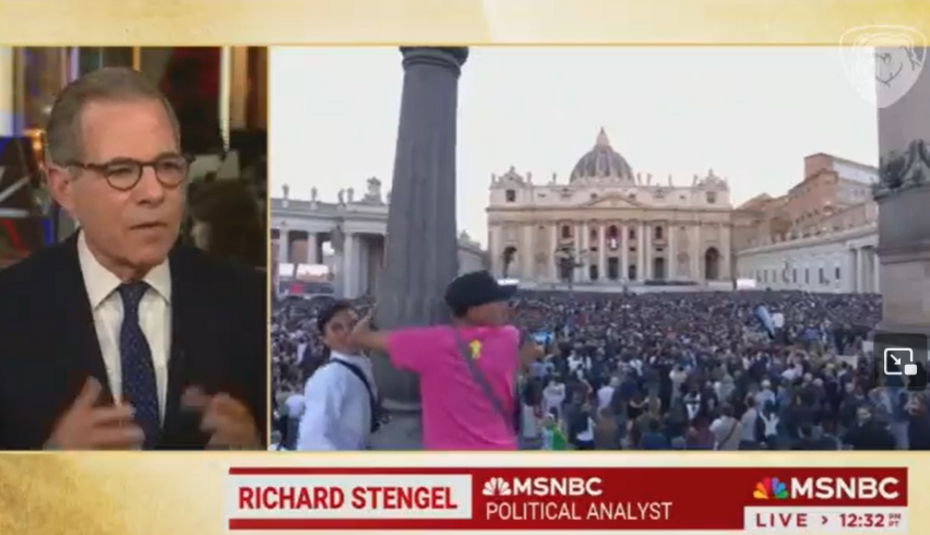
Later that night, MSNBC All In host Chris Hayes saluted Pope Leo for a worldview “fundamentally at odds with the nationalism of Donald Trump and JD Vance.”
As a matter of rhetorical strategy, it’s a way for anti-Trump journalists to take the inherent moral authority that a Pope represents and use it as a weapon to fight domestic political battles. But when past Popes (or even this one) espouse religious and moral views that are at odds with the secular liberal beliefs of most American journalists, journalists act as if it's the Popes who are supposed to yield to the media’s superior moral wisdom.
Almost immediately after Pope John Paul II’s death on April 2, 2005, liberal journalists began labeling his eventual successor as too conservative. “German-born Cardinal Joseph Ratzinger is also mentioned, but his extreme conservative views and his age might be his undoing when votes are cast in the Sistine Chapel,” ABC’s Charles Gibson pronounced on the April 4 edition of Good Morning America.
On the April 17 NBC Nightly News, reporter Jim Maceda echoed the conventional spin: “Ratzinger still appears the front-runner, but the ultraconservative Ratzinger, part of John Paul’s inner circle, may be hurt by news reports that, as a teenager, he was briefly a member of Hitler’s youth group in Nazi Germany....” Actually, young Ratzinger had no choice but to join the mandatory group; he later risked death by deserting the Nazi army in the waning weeks of World War II.
“He’s been dubbed ‘God’s Rottweiler,’ a staunch conservative under Pope John Paul, the enforcer of orthodoxy,” ABC’s David Wright similarly declared April 18 on Good Morning America, the day the cardinals began their conclave.
The next day (April 19), the networks had a predictably sour reaction to Ratzinger’s election. From the new pontiff’s native Germany, “there’s widespread doubt here that he will be able to overcome his reputation as the intimidating enforcer, punishing liberal thinkers and keeping the Church in the Middle Ages,” ABC News producer Christel Kucharz reported by telephone soon after the announcement.
“This is an extremely controversial choice,” ABC’s Cokie Roberts harrumphed during live coverage that afternoon. “This is a choice of the person who is seen by the world as the most conservative voice of Catholicism, and whether his papacy gives the lie to that or not, we have no way of knowing.”
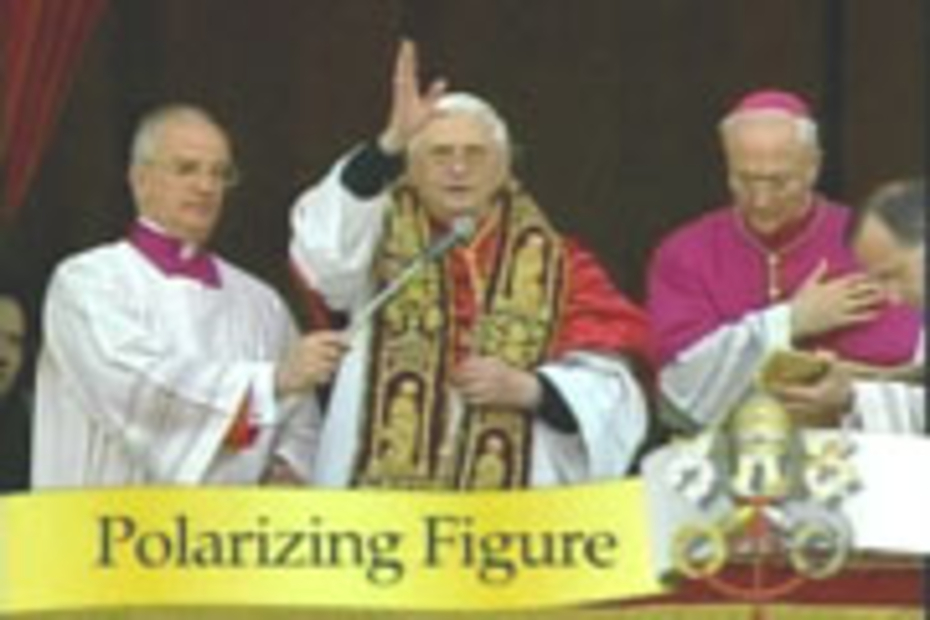
Over on FNC’s Special Report with Brit Hume, Roll Call’s Mort Kondracke painted the new Pope in dark terms. “He [Cardinal Ratzinger] said in his homily, on the death of Pope John Paul, that the world faces the menace of a dictatorship of relativism. And what he seems to represent is a dictatorship of certitude. I mean, one of his biographers said that he wanted to fight political totalitarianism in the world with ecclesiastical totalitarianism.”
The next morning on CBS’s Early Show, reporter Sheila MacVicar offered negative reaction from Germany: “This Pope’s rigorous fundamentalism worries many here.” On the same program, her colleague John Roberts noted how “many Catholics...found nothing to celebrate. His election would appear to dash reformers’ hopes that the Vatican would strike out in a new direction after the conservative reign of John Paul II.”
And on NBC’s Today, the new Pope was branded as “hardline,” “hard edge,” and a “staunch conservative.” Reporter Keith Miller painted Benedict as uncompromising: “An instinctive conservative, he was dubbed ‘The Enforcer,’ maintaining a resounding no to the ordination of women, divorce and contraception.”
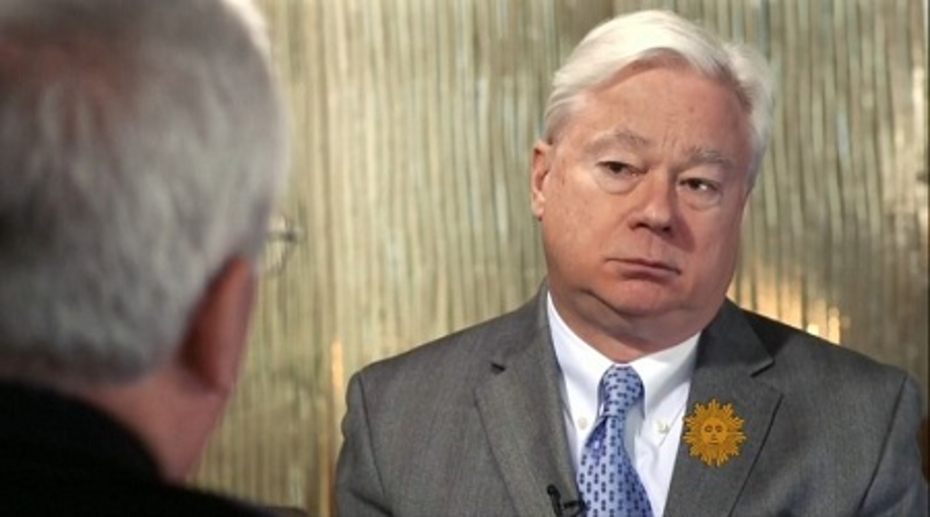
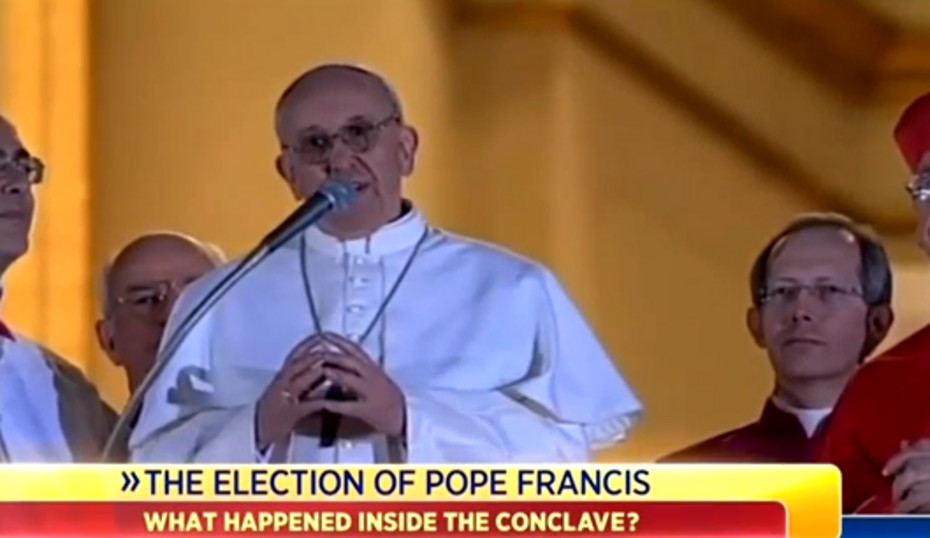
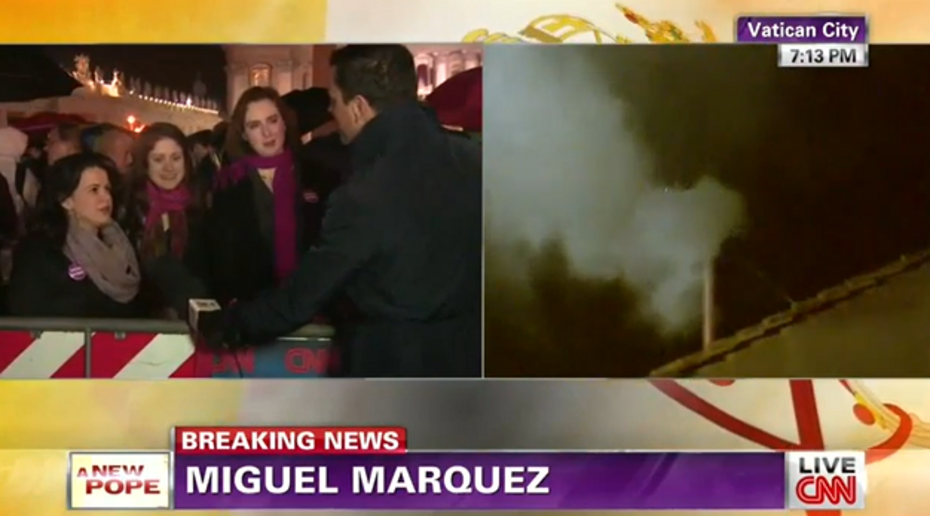
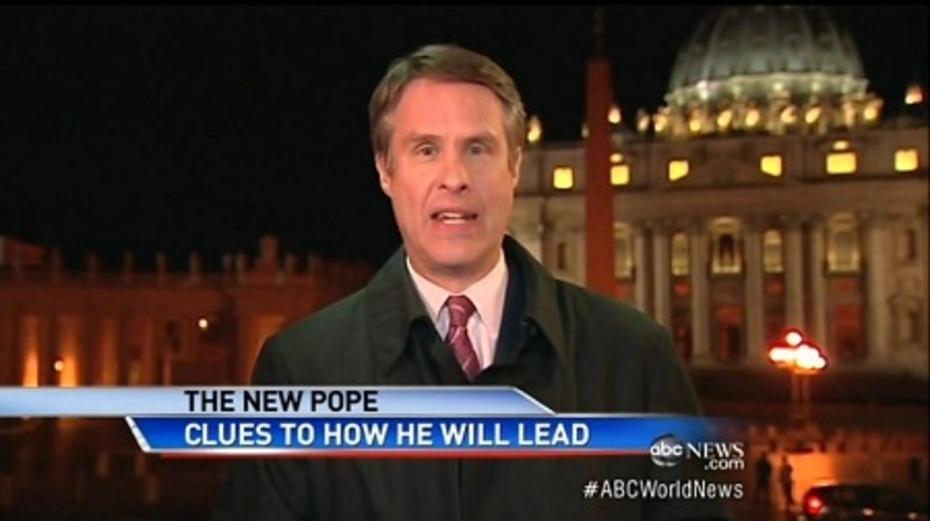
The election of Argentina’s Cardinal Jorge Bergoglio as Pope Francis on March 13, 2013 was met with surprisingly similar criticism as faced the new Pope Benedict eight years earlier. While awaiting the official announcement, CNN’s Miguel Marquez opined that Catholics around the world “hope for a more open, transparent, liberal, progressive church,” and handed his microphone to an American woman in St. Peter’s Square.
On that night’s CBS Evening News, correspondent Allen Pizzey informed viewers that the new Pope Francis is a “conservative...[who] opposes abortion, supports celibacy, and called gay adoption discrimination against children.”
Over on CNN, then-host Piers Morgan faulted the new Pope for failing as an advocate for gay rights in Argentina. “He has been having this ongoing battle with his own Argentinean president, who is also a Catholic, but she has been very forceful in pushing forward gay marriage, artificial insemination, free contraception, and so on, clashing with him repeatedly,” Morgan declared. He fretted: “If you are gay, and you want to be Catholic, at the moment, you are basically demonized....Successive popes have not moved with the times in a way that many Catholics, and I would be one of those, wish that they had.”
“Pope Francis’s conservative views on birth control, homosexuality, and women’s rights have not made him popular with relatively progressive Jesuit brothers,” correspondent Mark Phillips echoed on CBS This Morning the next day (March 14).
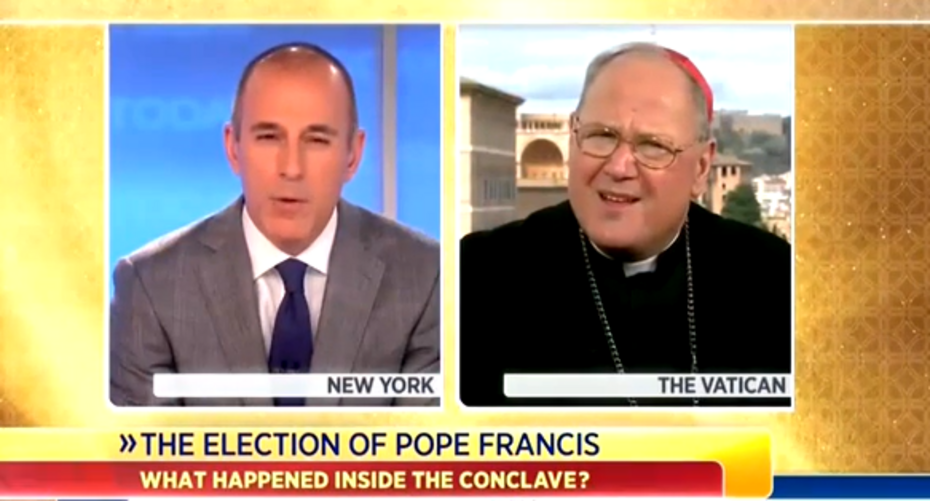
That morning’s New York Times also cast the new Pope as a carbon copy of his predecessors. “Cardinal Bergoglio is also a conventional choice, a theological conservative of Italian ancestry who vigorously backs Vatican positions on abortion, gay marriage, the ordination of women and other major issues — leading to heated clashes with Argentina’s left-leaning president,” wrote the Times’s Emily Schmall and Larry Rohter.
Over the years, many in the media came to admire Pope Francis, especially for his blunt criticisms of the Trump administration, though they never warmed to Pope Benedict. What’s obvious, though, is that journalists ultimately demand that Popes measure up to the media’s own secular liberal yardstick.
For more examples from our flashback series, which we call the NewsBusters Time Machine, go here.