NPR senior political editor Domenico Montanaro would claim to be nonpartisan -- hoping you don't notice he complained on PBS when President Trump described Maduro as a "dictator," or that he gushed over Sen. Elissa Slotkin's (D-Mich.) State of the Union rebuttal in 2025. The "news hook" for this discussion was a survey of White House correspondents that Montanaro helped assemble for a class at Georgetown University.
MONTANARO: The pool -- you know, which is the reporter or reporters who travel with the president or report on the daily goings on, often get to ask questions -- has, really been expanded to include a lot more partisan, right-leaning outlets, which can make for uneven quality, watered-down scrutiny, even. The partisan outlets are also often getting the first question at briefings. And transparency in this White House is way down. You know, things not just like medical reports and tax returns, but visitor logs are nonexistent, staff salaries aren't being released, and even transcripts of presidential remarks are pretty inconsistent.
There were no specifics here. The haughty assumption is that conservative reporters have no talent or smarts or ability to ask a tough, substantive question. When you allow more conservative reporters, you get "uneven quality" -- liberals have all the quality, and all the "independence," in their minds.
Did NPR water down the scrutiny when Democrats were in the White House? NPR's Franco Ordonez welcomed Biden press secretary Karine Jean-Pierre with a gushy "tell us what your appointment means" question. Tamara Keith is best known for asking Hillary Clinton in 2016 about her sobbing supporters when she clinched the Democrat nomination. She also described Trump as a "dragon."
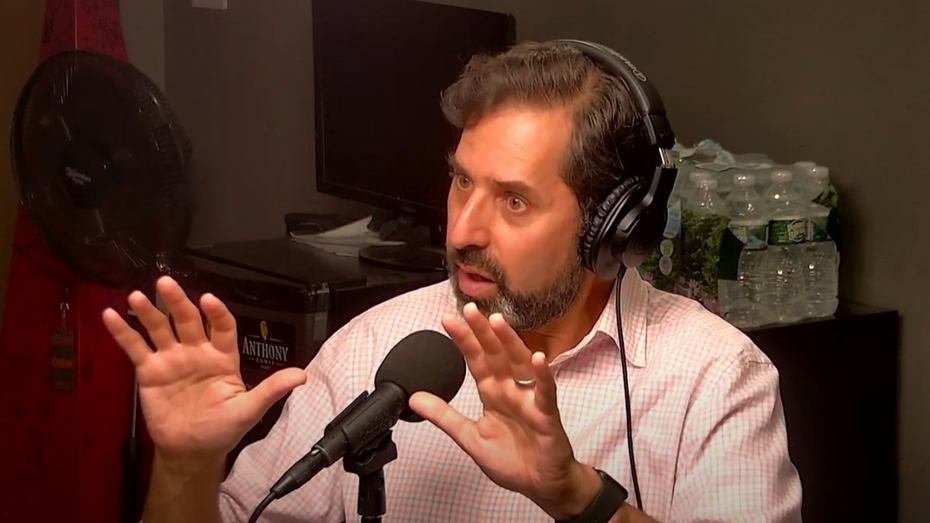
Media reporter David Folkenflik [pictured above] shared in the Domenico dump on conservative media:
DAVID FOLKENFLIK: Well, so this is an interesting case study, right? I mean, you're seeing Trump use the arms of the government to formalize his kind of political instinct to delegitimize the news media. So how do you do that? You dilute, you know, in the way that Domenico is describing, the number of reporters who may be asking accountability questions, adversarial questions, at times, about the war, tough question, by putting in a lot of people who are propping you up, you know, on podcasts or online. You offer less information, worse quality. It sounds a little bit like that joke of the Borscht Belt about the servings at a resort, right? It's - the food isn't good, and there's so little of it. That's kind of what you're getting here. And as a result, you're not seeing - at least in real time, on TV or streaming - the kinds of tough accountability questions being asked, even as they are being asked in different moments and different places.
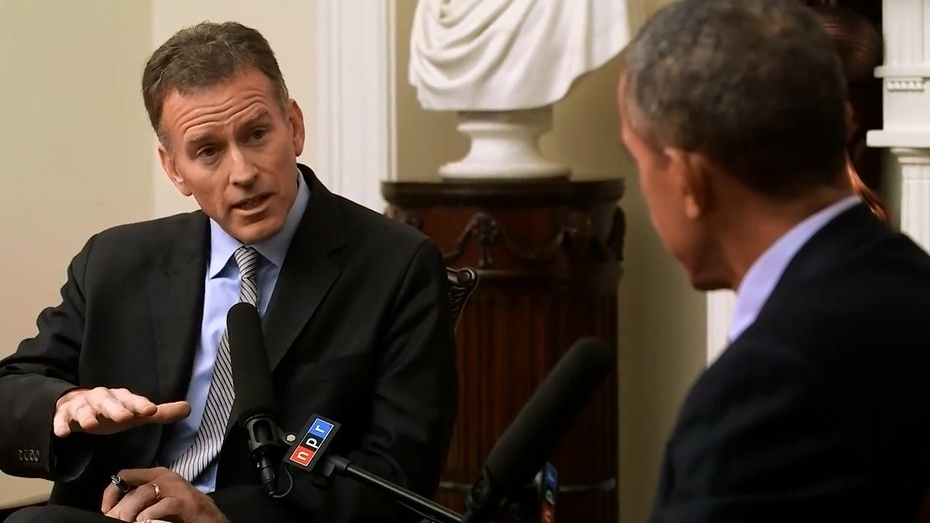
A little later, Montanaro acknowledged "Obama went around legacy media often," and "President Biden got criticized for not doing many interviews at all." This would undercut his earlier assertion that "transparency is way down." Trump has granted massive, almost daily access to reporter questions, including from the elitist lefties:
MONTANARO: But Trump has taken his criticism and undermining of traditional media really to a whole new level. I mean, there's a certain irony, too, because he seems to want the approval of the press also. He'll, on the one hand, say the press is the enemy of the people and fake news, and on the other, he goes on to take a ton of personal calls from reporters, especially during the Iran war here, and as his approval ratings have tumbled.
So much for Folkenflik's musings on "the food isn't good, and there's so little of it."
On the very same All Things Considered newscast, NPR covered far-left Senate candidate Graham Platner in Maine, gushing over his "populist" appeal, and never used the words "Nazi" or "tattoo."