Vice President Vance this week claimed Nixon is undergoing a historical "renaissance" and "if Watergate happened tomorrow, it would be like a 12-hour news story. The idea that it would have taken down a presidency is crazy."
That's not entirely true. The Democrats tried to repeat this impeach-or-resign move with "independent counsels" with Reagan over Iran-Contra, and with Trump and Russian "collusion" in his first term. It's never a "12-hour news story" with a leftist media that delights in ruining Republican reputations for all time. Nevertheless, Capehart expressed a typical disgust:
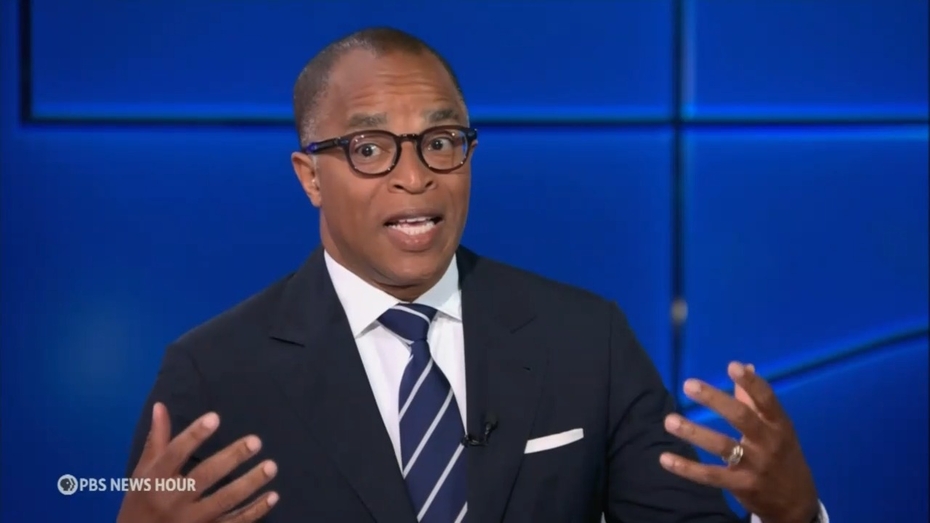
J.D. Vance said this week Nixon was undergoing a historical "renaissance" and today Watergate would be a "12-hour news story." Nah. But it upset Capehart and Brooks on PBS @NewsHour, who said at least Nixon had a "sense of shame," unlike Trump.
— Tim Graham (@TimJGraham) June 27, 2026
In its early years, PBS LOVED… pic.twitter.com/zEUUAcrrX4
CAPEHART: Nixon did not fall because of the deep state, which is what he said in another part of that answer. His presidency fell because he had the one thing that Donald Trump has never had, and that's a sense of shame.
When fellow Republicans went to President Nixon and said, because of all the stuff you did, bugging the DNC and all these criminal acts, we are going to impeach you, and rather than President Nixon suffering the shame of being at the time what would have been the first president impeached in a very long time, he decided to resign. That's not what we're dealing with here with President Trump. And certainly Vice President Vance wrapping his arms around Nixon is a very curious thing to do.
Brooks wanted to underline how successful the prosecutors were in getting convictions, but that was then, apparently:
BROOKS: More than a dozen people went to jail. It was a criminal enterprise. But having said that, J.D. Vance is absolutely right. It would be a one-day story today, because you define deviancy down. The standards of the entire country have been deteriorating because of what we have had lived through over the last decade. And for that reason, the Republicans would not do what Republicans did in 1974, which was to tell him you got to go. And so it would -- he is right. It would be an absolute one-day story, and we would all move on. [Laughter]
Earlier, Brooks did effectively identify what's going on with the Democratic Socialist faction (in an academic way, without objecting to it):
On PBS, David Brooks effectively identified what's going on with the Democratic Socialist wing of the Democrats (in an academic way, without objecting to it): the party's energy has shifted from the unions to the universities. pic.twitter.com/HHPJBAgK8J
— Tim Graham (@TimJGraham) June 27, 2026
BROOKS: Yes, I think there's somewhat of a realignment going on. The Democratic Party's heart and soul used to be the labor movement. It used to be the unions. It's not anymore. The heart and soul of the Democratic Party is the universities and especially the elite universities. And so the candidate who won in New York 13, Darializa Avila Chevalier, went to Columbia, was an activist in the Gaza protests. She is a sociology Ph.D., or I think she's trying to get her Ph.D.
And she grows out of that place. And if you look at all the candidates that -- the DSA candidates, where they did well, they did very well in the more affluent, the whiter and the better educated parts of New York City. And the traditional candidates did well in the poorer and more multiracial parts of New York City.
And so the faculty lounge has become a strong part of the Democratic Party and faculty lounge politics have become a strong part of the Democratic Party. And that I think extends somewhat beyond New York City. You have Democratic socialist candidates in Washington, D.C., mayoral race, around the country. You have other DSA candidates.
I don't think it's going to totally realign the party. There just aren't that many people with sociology doctorates and people who respond to this faculty lounge politics. But there are enough. And I think one of the things that will shift within the Democratic Party as a whole is I think Israel will become a flash point for whoever wants to be the nominee in 2028.
I think the Democratic Party is really shifting strongly on that one, I think on some of the economic issues. Where I'm curious to see, if we go back to no fund of police. Avila Chevalier is a prison abolitionist, and she's been asked repeatedly, do you think murderers should serve time in jail? And she refuses to answer that question.
Democrats did very poorly a couple of years ago because of the defund the police. That just seemed out of touch to a lot of people, including a lot of Democrats. And will the party make that mistake again because the -- where the energy is in the party is in the DSA wing? But hope for the long-term elections is the traditional parts of the party somehow getting some mojo and some energy to match what they're up against.
Capehart, like his fellow MS NOW hosts, tried to claim this DSA thing might be a New York City phenomenon, not a national trend. But it's happened in deep-blue cities all over.