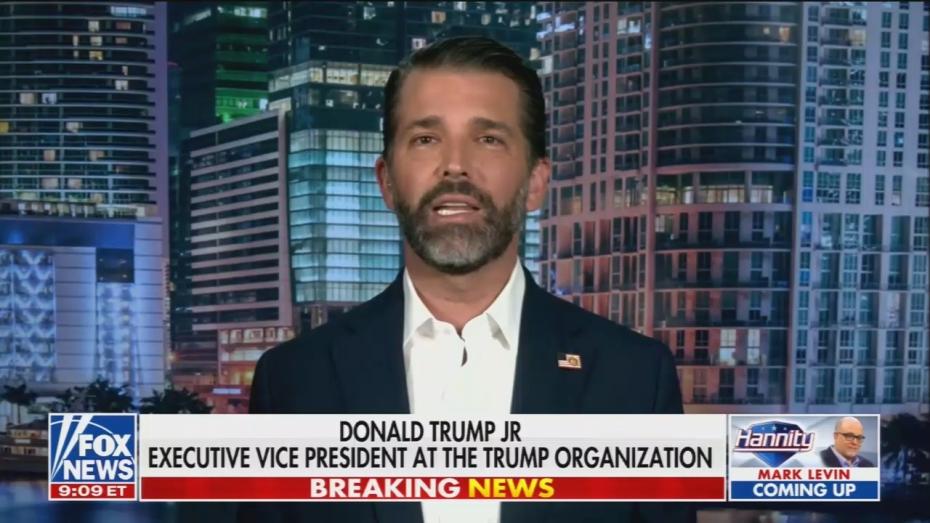
In a random act of journalism devoid of Trump Derangement Syndrome, Status’s Oliver Darcy chronicled Tuesday the journalistic malpractice committed by and the fallout inside ABC News after an error-laden October 7 article about a venture capital firm tied to Donald Trump Jr. Darcy shared, “the expectation inside ABC News is that the network will ultimately terminate” both the reporter behind the story and the editor, who’s served as “the senior coordinating producer for White House coverage.”
Darcy spent the first three paragraphs recapping the initial developments regarding the article by Nathan Lee that falsely insinuated malfeasance in the Department of War steering contracts to Anduril Industries, which has received (small amounts of) funding from 1789 Capital.
Once contacted by a 1789 Capital spokeswoman (whom ABC failed to contact prior to publication), the article disappeared from the site without explanation before resurfacing days later with a series of corrections and ridicule across the spectrum.
Darcy explained that, following the ordeal, “there were intense internal discussions not only about how to address the immediate fallout, but also about what steps needed to be taken to ensure a similar breakdown did not happen again.”
But in his nightly newsletter, Darcy shared the internal probe had “essentially wrapped up” with both Lee and White House producer Fishel likely to be fired soon, seeing as how both were “quietly suspended over the debacle” and what The Wall Street Journal said was “paid leave.”
“Some people even believed this week that the terminations had already happened. But an ABC News spokesperson told Status on Tuesday afternoon that ‘no one’s employment status has changed.’ The spokesperson declined to answer further questions on the network’s internal probe into the matter,” he added.
Darcy spent the rest of his article explaining in a surprisingly thorough and unobjectionable manner all the various basic journalistic errors committed, starting with the fact that “disciplinary action would not be unwarranted, given that the sloppy handling of the story had not only embarrassed the news organization, but also exposed it to the very real possibility of litigation.”

He correctly put upper management on blast:
[L]eadership did not demonstrate the best judgment either. When the inaccurate story was first published, the outlet took the extraordinary action of nuking it from the web entirely, without leaving an editor’s note behind explaining why it had taken the highly unusual step. In the immediate aftermath, a network spokesperson also declined to comment about the matter, leaving the organization officially silent.
Only days later, after mounting public criticism, did ABC News republish the story with a note outlining the significant corrections that had been made. Arguably, had the network simply acknowledged from the outset that the story had been removed because it did not meet editorial standards, much of the public headache could have been avoided. Instead, its silence only fueled the backlash.
Later, he concluded that “it’s exceedingly rare for a reputable news organization to delete a story and then go silent, leaving its audience in the dark about what happened.”