In the wake of former President Donald Trump’s double-digit victory in the New Hampshire primary, there’s been a notable shift in broadcast TV’s coverage of the GOP nomination race. While Trump remains the center of attention (garnering more than five minutes of airtime for every one minute allotted Nikki Haley), and he’s still on the receiving end of mostly (89%) negative coverage, there’s been a significant increase in TV news airtime devoted to the role of policy issues in the Republican race.
This is a broadening of the networks’ hostile agenda as the media adjust their focus to the all-but-certain general election contest between Trump and President Biden. While most of Trump’s bad press is still associated with the various legal cases against him, the former President is now also being blasted with hostile coverage on immigration (86% negative) and Russia (95% negative). That’s a big change from last year, when the networks rarely discussed Trump’s stances on various policies. Details:
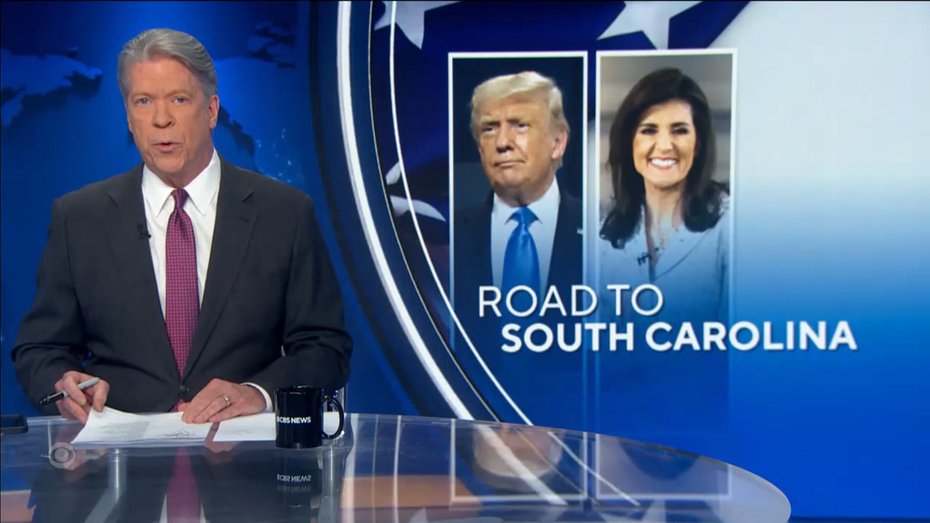
In 2023, our study found Trump accounted for 79% of all GOP candidate airtime against a fragmented field of challengers who all trailed him in the polls. Now that the race is down to just two major candidates, TV news is more Trump-focused than ever. The former President’s coverage now accounts for 84% of all GOP candidate airtime, with Haley accounting for just 16%.
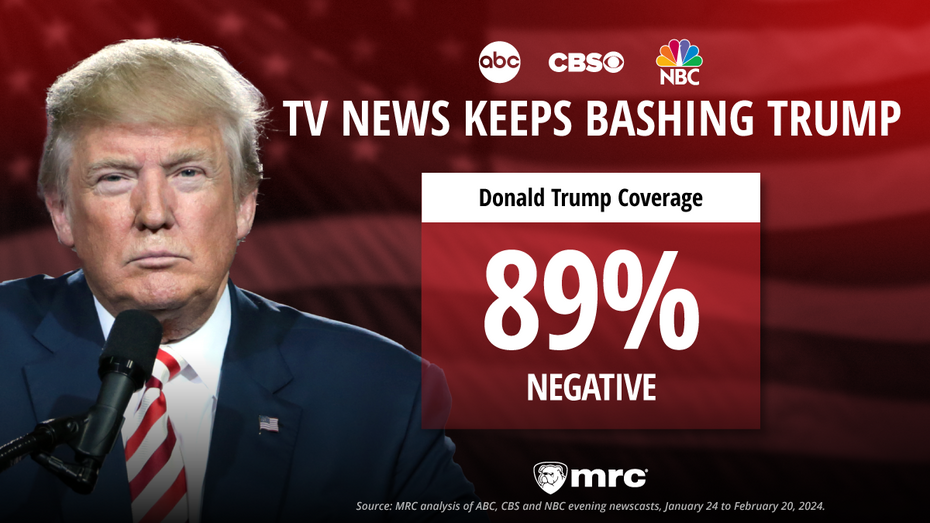
This year’s Trump-trashing comes in the wake of 2023’s coverage, which an earlier MRC study determined was 93% negative. As for Haley, her 2023 coverage came out balanced: 50% positive, 50% negative.
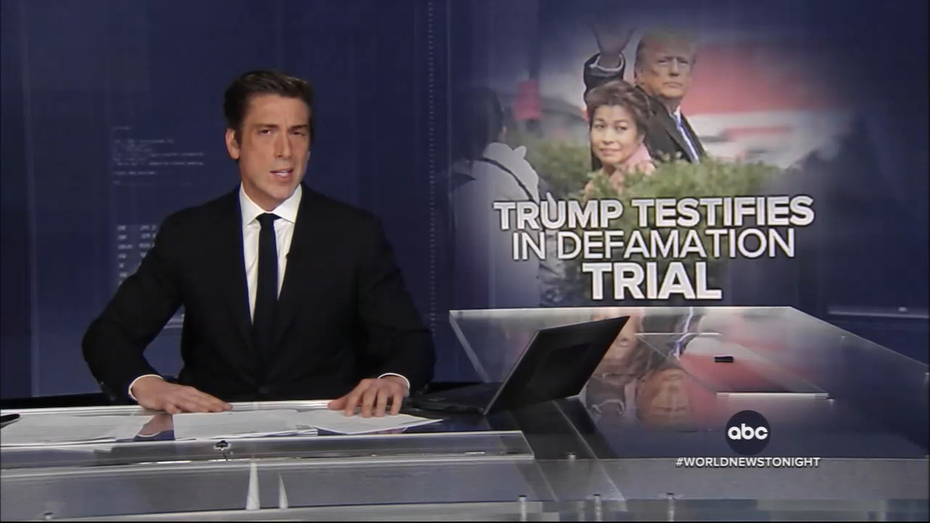
The networks focused most of their airtime on the federal January 6 case against Trump (21 minutes), followed closely by the Georgia election case (20 minutes, mostly reports about alleged wrongdoing by Fulton County’s Democratic D.A., Fani Willis). The Democratic New York Attorney General’s lawsuit against Trump’s business practices received a bit more than 16 minutes of coverage, while the civil case brought by writer E. Jean Carroll received 15 minutes.
And, as was the case last year, evening news coverage of these cases has been almost wholly critical of Trump (95% negative). The only breaks in the predictable anti-Trump drumbeat were when reporters talked to actual Republican voters, such as the South Carolina man who told ABC’s Alex Presha on February 18 that, as a result of the massive $355 million fine imposed on Trump two days earlier, “I’m more dedicated to voting for him than I was even before.”
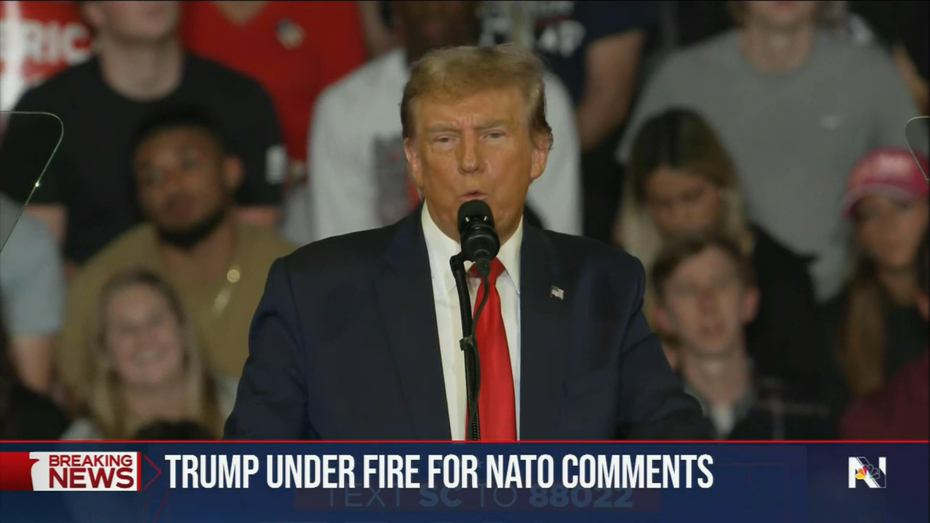
Now, the issues getting coverage have everything to do with the GOP frontrunner. Topping the list: immigration (18 minutes, 32 seconds), as the former President weighed in on the border negotiations in Congress. Another 17 minutes, 7 seconds was spent on Trump’s views on Russia, NATO and the Ukrainian aid package. (No other issue area received more than two minutes of airtime during the four weeks we studied.)
As previously noted, the networks are exhibiting the same hostility to Trump’s policy positions as they have in their coverage of his court cases. Since January 24 the networks’ spin on Trump’s Russia/NATO/Ukraine stance has been 95% negative, while their spin on his handling of immigration and the Southern border has been almost as harsh (86% negative).
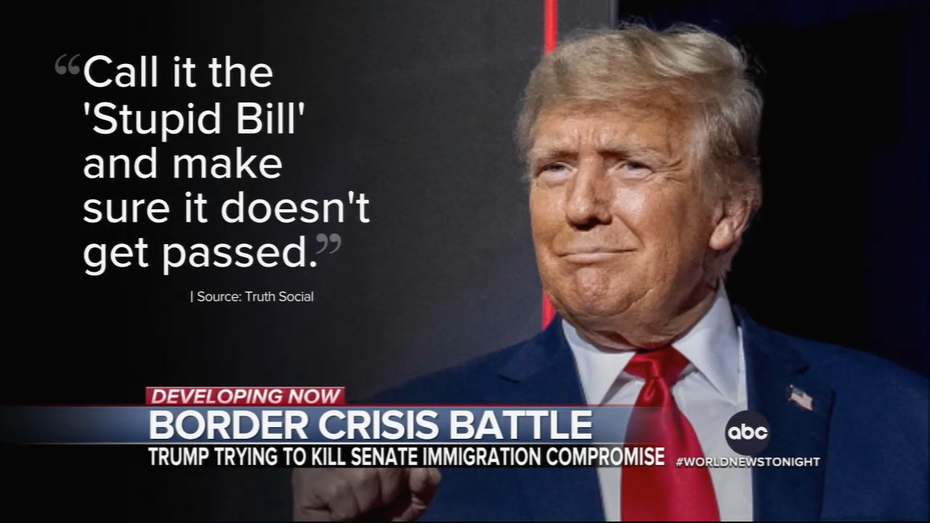
Earlier, on January 29, ABC’s Mary Bruce had similarly cast Trump as a saboteur, claiming “Republicans are exasperated that Trump is trying to derail his party’s top priority.”
But in a rare fit of disclosure, NBC’s Ryan Nobles undermined all of that negative spin when he announced February 5 how “our new NBC News poll shows 57% of voters believe Mr. Trump would handle border security best; just 22% pick Mr. Biden.”
If, as expected, Saturday’s South Carolina primary cements Trump’s position as the all-but-certain Republican nominee, the next eight months of general election coverage seems clear: endless coverage bashing Trump not only for the legal cases brought against him, but also for the anti-establishment policies he would bring to a second term.
++++
METHODOLOGY: We calculated the spin of the GOP primary candidates by tallying all clearly positive and negative statements from non-partisan or unaffiliated sources — in other words, reporters, anchors, voters as well as Republicans not linked to any of the campaigns. We excluded evaluative comments from the GOP candidates, their campaign staffs and identified surrogates, as well as all Democratic sources. In this way, we could eliminate the partisan back-and-forth of the campaign, in order to isolate the spin being imparted by the networks themselves. It also excludes “horse race assessments” about the candidates’ prospects for winning or losing.