Schilling mentioned the Biden-era DOJ’s investigations of parents at school board meetings and noted how the TV networks were pro-Biden. Seawright and Cornish denied it and falsely said TV networks did not treat Biden with “loving care.”
Cornish questions were framed in a way that painted conservatives against free speech amid the Jimmy Kimmel “expectant widow” controversy. Schilling said Kimmel was “playing a game” to get "as close to that line as possible to cause controversy, to get more eyeballs."
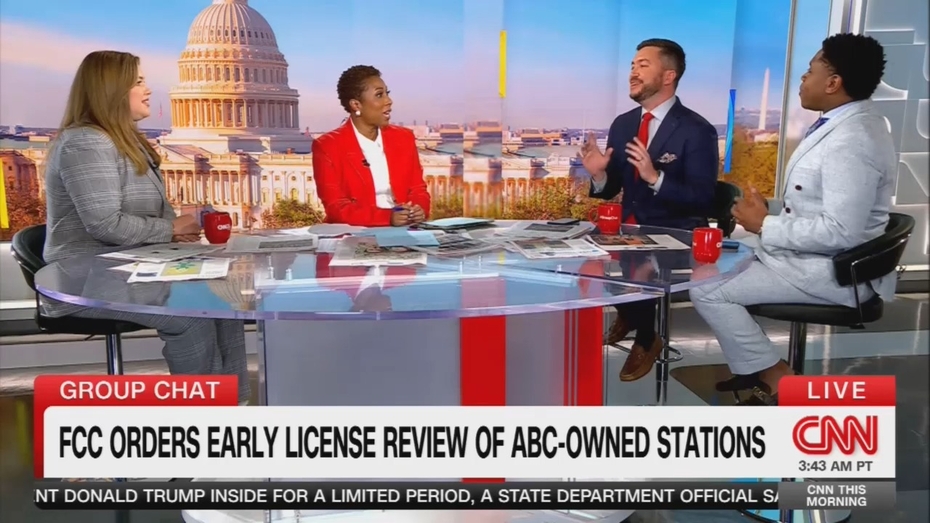
Wednesday's CNN This Morning framed the Kimmel situation as a free speech issue. Panelist Antjuan Seawright called the Republicans fans of "convenient speech."
— Nick (@nspin310) April 29, 2026
Panelist Terry @Schilling1776 said the argument was "rich" given the Biden DOJ labeled parents at school board meetings… pic.twitter.com/v16k1F77WA
Seawright went to go after the conservative for “convenient speech,” which, after Cornish asked him to describe his term, he explained:
They uplift free speech when it's convenient for them or when it fits the mold or the mold they want it to, but yet when someone criticized the president, or we see resistance to the idea of what conservatives who are in charge believe, then all of a sudden it becomes a problem.
Seawright claimed, “And I think state-run media is what Republicans in this moment are aiming for.”
Cornish, to her credit, alluded to the hypocrisy of “Democrats, who for many years, especially on the progressive left, were like, words are violence.”
After Seawright said violent words were not protected, while referencing King Charles’ speech, Schilling called out Seawright's use of the “convenient speech” term:
I just got to say, like, the convenient speech thing is rich, because I'm old enough to remember when Biden's DOJ was going after parents as domestic terrorists simply for showing up at their school board meetings to voice their concerns about what was going on in their kids schools.
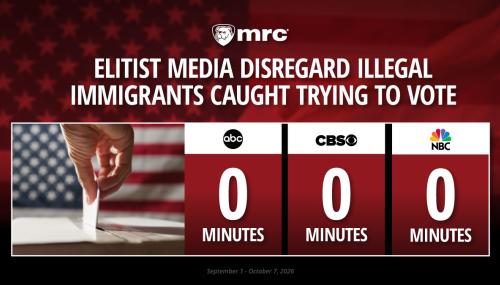
After Seawright said the Biden-era FCC did not go after any TV networks, Schilling pointed out the network media's cover-up of Biden’s faltering mental capacities.
— Nick (@nspin310) April 29, 2026
Cornish defended the networks: "I don’t think that networks treated Biden with loving care.” pic.twitter.com/PYEPeMfesO
Seawright asked if there were times when anyone threatened to go after TV network licenses. Schilling responded, “Because the TV networks are all on them,” as he mentioned calls to go after FOX’s broadcast licenses, as in 2023, some Democrat activists called for the FCC to do, but not the Biden administration.
Cornish defended the networks and said, “I don’t think that networks treated Biden with loving care.” Seawright also responded, “We had to raise hell to get positive coverage about things like the Biden-Harris administration were doing on behalf of the American people.”
Schilling pointed out the obvious of the media cover-up of Biden’s senility and faltering mental capacities: “Oh, please. We were told that Joe Biden was at the height of his game. While he's clearly suffering from Dementia.”
Cornish ended with an attempt to frame Schilling as anti-Free speech, which he responded: “The First Amendment has never protected libel, seditious libel, or obscenity, and I would count death threats under obscenity.”
As the media’s defense of Kimmel’s “expectant widow” comment has grown, Democrats have seemingly grown to have a different tone on free speech if they need to defend a liberal late-night host.
The transcript is below. Click "expand"
CNN This Morning
April 29, 2026
6:41:00 AM Eastern
(...)
AUDIE CORNISH: How do you guys walk this line?
TERRY SCHILLING: Well, first of all, I just got to say I do feel bad for all my democratic friends who have to pretend that Jimmy Kimmel is funny. He is a far cry from Jay Leno, David Letterman.
CORNISH: Hey, we're not here for comedy critiques.
SCHILLING: [Laughter] I mean, I’ve just got to say.
CORNISH: Okay, I’m here for free speech arguments. What is the argument now that Republicans are in power about how to deal with free speech?
SCHILLING: Well, the reality is that they're playing a game. Jimmy Kimmel is obviously playing a game. He's getting as close to that line as possible to cause controversy, to get more eyeballs.
But the reality is if you make jokes about the president's death, you get looked at, you get investigated. The FBI, the Secret Service comes to your door. But this - it's just kind of annoying to me because you have James Comey and Kimmel like running from the bit. If you're going to make the joke, commit to it. Don't be a coward. You made the jokes, you said the things you were trying to be edgy, own it.
ANTJUAN SEAWRIGHT: Respectfully, I don't think you want to address the real issue here. And the real issue is convenient speech. Republicans want to celebrate and uplift convenient speech. What this says to me is this is another page in the catalog to silence and suffocate the voices of people who do not agree with the president and this administration. We've seen this at the ballot box with some of the tactics -
CORNISH: But what do you mean by convenient speech? Can I ask you to follow up?
SEAWRIGHT: Because they uplift free speech when it's convenient for them or when it fits the mold or the mold they want it to, but yet when someone criticized the president, or we see resistance to the idea of what conservatives who are in charge believe, then all of a sudden it becomes a problem.
And I think state-run media is what Republicans in this moment are aiming for.
CORNISH: What's the complication for Democrats, who for many years, especially on the Progressive Left, were like, words are violence?
SEAWRIGHT: Well, there's a difference between using violent words at the same period of time, criticizing those who are in power. The King referenced it in his speech yesterday: checks and balances. Checks and Balances does not always have to come from Congress. It can come from the American people.
CORNISH: Yeah
SCHILLING: I just got to say, like, the convenient speech thing is rich, because I'm old enough to remember when Biden's DOJ was going after parents as domestic terrorists simply for showing up at their school board meetings to voice their concerns about what was going on in their kids schools.
CORNISH: Having been to some of those meetings, it was pretty intense. But yes.
SCHILLING: It was. But like, okay, it's one thing to criticize Trump. I think we're all okay with people criticizing him after these ten years. We've seen a lot of criticism, we're used to it by now. But this is crossing a line. And the Democrats go after -
SEAWRIGHT: Name a time when anyone from the Biden-Harris administration threatened the license of a TV network.
SCHILLING: Because the TV networks are all on them. And there were calls to go after FOX, period. There were calls.
CORNISH: I don’t think that networks treated Biden with loving care. I mean, they could have easily complained about coverage in the same way.
SEAWRIGHT: We had to raise hell to get positive coverage about things like the Biden-Harris Administration were doing on behalf of the American people.
SCHILLING: Oh, please. We were told that Joe Biden was at the height of his game. While he's clearly suffering from Dementia.
SEAWRIGHT: You still cannot name a time in which the Biden-Harris FCC went after a TV network -
SCHILLING: Name a conservative that was doing death threats like this?
SEAWRIGHT: - or threatened a TV network for their license. You certainly cannot name a time in which Joe Biden or Kamala Harris posted on social media, threatening a TV host.
CORNISH: You guys for one second, one post. We have to go to other topics. But two, because I think it's pretty clear that in the in the age of the attention economy, the sheer volume of people saying things that people in power wouldn't like, I mean, clearly the president is even dealing with that right now on the MAGA Right over the war with Iran. And I'm hearing some pretty vicious things being said there. So, to me, you're either a free speech absolutist -
SCHILLING: I think there are limits.
CORNISH: Oh - well. When there’s a new -
SCHILLING: Calls for violence -
SEAWRIGHT: It’s called convenient speech.
[CROSSTALK]
ELEANOR MUELLER: The FCC has indicated that this is not actually related to what. I think that's part of the problem is that we're litigating a different issue than free speech, with the subtext being free speech.
CORNISH: And we're also going over to Europe and telling them that phrase. You just said there are limits. It's like, whoa, slow down. What are you doing? I don't think people have settled on what their actual argument is here.
SCHILLING: But the United States Law on free speech is very clear. The First Amendment has never protected libel, seditious libel, or obscenity, nd I would count death threats under obscenity. But there have always been limits to the First Amendment. The founding fathers were clear about that.
CORNISH: Yeah, I’m going to bring you back because I think there is a couple very strong conservative and right-wing voices who would question where - who draws that line and what that means.
(...)