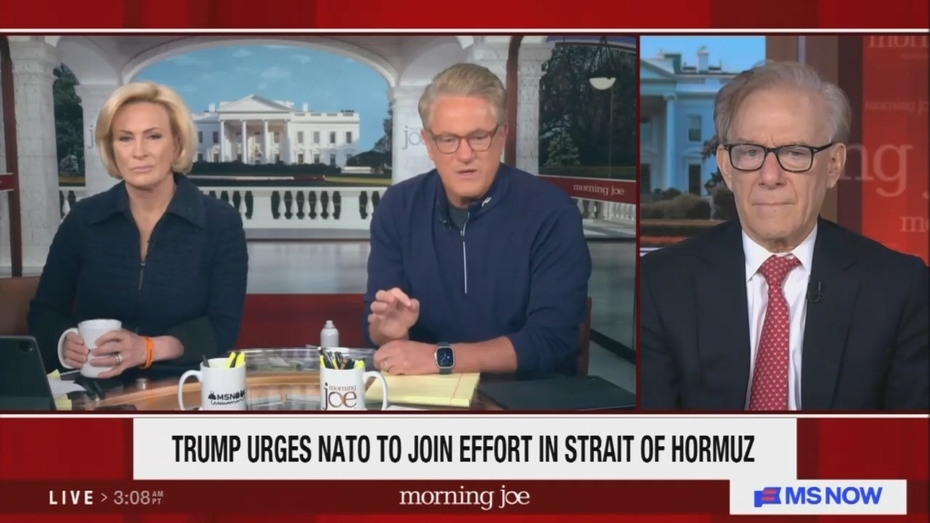
Scarborough’s comparison came in response to FCC Chairman Brendan Carr’s threat to investigate and revoke broadcast licenses from over-the-air networks in response to Iran coverage.
He told Ignatius, “you and I, are old enough to remember - I would say wise enough to remember how long it took the Pentagon to recover from the lies, the constant lies that General Westmoreland and the spokespeople in the Pentagon gave to the American people throughout the Vietnam War. It took two decades to recover from that. “
MS NOW's Joe Scarborough compares the Iran conflict to the Vietnam War, while saying he's not comparing Vietnam to Iran. pic.twitter.com/OfdDHZn6sg
— Nick (@nspin310) March 16, 2026
Scarborough was mainly upset with the treatment of the perfect and never wrong press:
And the beating up of the press, I mean, almost takes you back to the middle of Vietnam where things aren't going well. The press reports on it. People call them communists. And then a decade later, everybody's yelling, why didn't the press report about this more? Why did it take so long?
It would be wrong to call some of the media supportive of Iran or other terrorists, but not when they are literally seen at parties with members of the Iranian regime.
He also had to get a Hegseth attack in here, with a claim that they don’t remember the Vietnam War:
When I hear this from Pete Hegseth, and I know he acts like a child, that's me, not you. But when I hear this from Pete Hegseth or anybody else in the administration, they obviously don't remember the severe, lasting generational damage that all the lies coming from the Pentagon during the Vietnam War, how long it took our United States military to recover for that.
At the end of his “question” to David Ignatius, he called former White House Press Secretary Ari Fleischer ignorant:
I'm not suggesting that we're getting the same amount of lies from this Pentagon or from this administration. I'm just saying the ignorance, even of people like Ari Fleischer who go out and say, "How dare anybody write anything bad about our military? You're almost rooting against America."
All these people know better. The press is doing its job. End of story.
After listening to Scarborough's comparison, after just two weeks of conflict by the way, of Iran to Vietnam, Ignatius gave his simpler comments on the press:
So, blaming the press is - it happens in every war. It's happening now. Our job, more clearly than ever before, is to be honest and to warn of dangers we see ahead and question assumptions that policymakers are making (...)
Ignatius was right, this does happen in seemingly every war and conflict, as the media’s reporting has had issues that seem to have an anti-American and, sometimes, an anti-military bias. It seems to just be a terminal issue.
The media should take some advice from Ignatius and “be honest.”
The transcript is below. Click "expand":
MS NOW’s Morning Joe
March 16, 2026
6:08:52 AM Eastern
JOE SCARBOROUGH: You know, I just want to say really quickly, David Ignatius, we - you and I, are old enough to remember - I would say wise enough to remember how long it took the Pentagon to recover from the lies, the constant lies that General Westmoreland and the spokespeople in the Pentagon gave to the American people throughout the Vietnam War. It took two decades to recover from that.
And the beating up of the press, I mean, almost takes you back to the middle of Vietnam where things aren't going well. The press reports on it. People call them communists. And then a decade later, everybody's yelling, why didn't the press report about this more? Why did it take so long?
When I hear this from Pete Hegseth, and I know he acts like a child, that's me, not you. But when I hear this from Pete Hegseth or anybody else in the administration, they obviously don't remember the severe, lasting generational damage that all the lies coming from the Pentagon during the Vietnam War, how long it took our United States military to recover for that.
I'm not suggesting that we're getting the same amount of lies from this Pentagon or from this administration. I'm just saying the ignorance, even of people like Ari Fleischer who go out and say, "How dare anybody write anything bad about our military? You're almost rooting against America.”
All of those people know better. The press is doing its job. End of story.
DAVID IGNATIUS: So, Joe, there can't be anything tougher than to be a president trying to command a war that's not going the way you want. That's been true throughout our history, and it's true now for President Trump. This is a tough time for him. The performance of the US Military itself has been extraordinarily good through this war.
They made some terrible mistakes, as evidenced evidently, they did in hitting the school in southern Iran. But in general, the military's been outstanding, as President Trump says.
The problem is when these tactical successes are matched with what appears to be very little good strategic planning about how you terminate the conflict on terms that are advantageous. It just doesn't seem to be done - have been done. And that's what's really worrying Washington. As I talk to people through the weekend, Joe and Mika, I just kept hearing the same things. There's a deep sense of foreboding.
The one shoe that hasn't dropped in this conflict yet is terrorism. That's something the Iranians are very good at, and they're backed into a corner, but they have not played anything like their last card yet. So, as I made my rounds talking to people, I heard concern about that and other things over and over again.
So, blaming the press is - it happens in every war. It's happening now. Our job, more clearly than ever before, is to be honest and to warn of dangers we see ahead and question assumptions that policymakers are making. This is not a time to say, “Yes, sir, absolutely. That's great.” It's a time to be skeptical. And that's how we can be helpful. If people don't realize that in the White House -
SCARBOROUGH: Well, yeah-
IGNATIUS: They’re making a mistake.
(...)