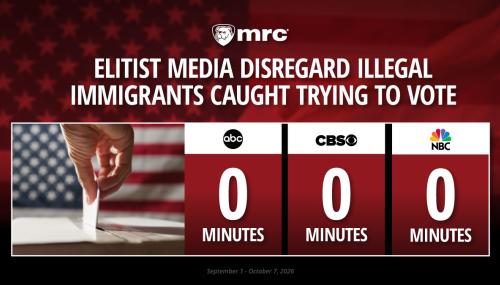
The Elitist Media never cease in their advocacy for open borders at every turn. In this instance, CNN’s Jake Tapper pleading to DHS Secretary Markwayne Mullin on behalf of the Haitians impacted by the Supreme Court’s recent ruling affirming that Temporary Protected Status is, in fact, temporary.
Watch as Mullin freezes Tapper after a non-question speech:
WATCH: DHS Secretary Markwayne Mullin SHUTS DOWN Jake Tapper's immigration advocacy
— Jorge Bonilla (@BonillaJL) June 29, 2026
JAKE TAPPER: Do you maintain that it is safe in Haiti to send these people back?
MARKWAYNE MULLIN: Well, I think, like I said, Jake, this is a decision that's being made from the State… pic.twitter.com/JYrf1PS9ro
JAKE TAPPER: Do you maintain that it is safe in Haiti to send these people back?
MARKWAYNE MULLIN: Well, I think, like I said, Jake, this is a decision that's being made from the State Department, from myself and the president, and there's a lot of things that we look at as when we take this in consideration. It's not just one factor that plays into this.
TAPPER: The reason I ask is because I heard Stephen Miller, who is driving a lot of this, say that Haiti is safe for Haitians. And I just looked at the State Department's Web site, and they have a level four do not travel advisory for Haiti just from a few months ago, from April, and it says -- quote -- "Violent crime is rampant. The expansion of gang organized crime and terrorist activity has led to widespread violence. Crimes involving firearms are common. Crimes include robbery, carjacking, sexual assault and kidnappings for ransom."
(CROSSTALK)
TAPPER: That doesn't sound safe to me.
MULLIN: Well, that do not travel is not for Haitians. That's do not travel for the United States, because they are kidnapping or trying to kidnap individuals from the United States because they feel like they -- their family has the money to pay the ransom. We have a -- we have Do Not Travel in places in Mexico or advisory warnings. In fact, if you go through our Web site in the State Department, you will see there's advisories to a lot of places that are vacation destinations that we have advisories on because of the real risk to Americans. That doesn't mean it's a risk to the individuals that live there. So that isn't -- that advisory is to American citizens traveling to Haiti, not Haitians going back home.
TAPPER: I understand that, but, based on everything I have read, including the U.N. and Human Rights Watch, it doesn't sound safe for Haitians. More than 8,100 killings documented last year, those weren't Americans. Haiti is among the top five countries with the highest rates of rape and sexual abuse, with more than 1,200 cases of sexual violence last year. That's not Americans; 1.4 million people have been displaced. Those aren't Americans.
MULLIN: Is there a question in that?
This happened after Mullin calmly explained to Tapper all the different ways that these individuals could have applied to attain a more permanent status in the country, but chose not to. Mullin also noted that a great deal of these individuals entered into the country not in the immediate aftermath of the 2010 earthquake, but during the Biden administration’s wide open border.
In fact, one grossly underreported aspect of the TPS Haitians’ story is the large number of them that dumped permanent residency cards and passports from places such as Chile and Brazil on the southern border.
100% correct. When I was at the Del Rio, TX Haitian bridge camp in 2021, many of the Haitians told me they had been living in Chile & Brazil for years before coming to the US illegally for economic (not safety) reasons. The Haitians were dumping & tearing up their Chilean… https://t.co/KbbX55bKda pic.twitter.com/okEZkjRoqI
— Bill Melugin (@BillMelugin_) June 26, 2026
This aspect of the migrant story is buried by the Elitist Media, right next to the crimes committed by illegal aliens, as they continue to advocate for continuously open borders. Such coverage is by design.
Click “expand” to view the full transcript of the aforementioned interview as aired on CNN’s State of the Union on Sunday, June 28th, 2026:
JAKE TAPPER: Joining us now is the Secretary of the Department of Homeland Security, Markwayne Mullin, who joins us from his home in Oklahoma. Thanks so much for joining us, Mr. Secretary. So, more than 350,000 people from Haiti and Syria who have lived and worked legally in this country under TPS, will you be deporting all of them? Will they be all deported back to their home countries, Haiti and Syria? And when will these deportations start? Will it be immediately?
MARKWAYNE MULLIN: Well, Jake, first of all, Temporary Protected Status was never intended to be permanent. And there's a lot of people that came over here 15, 20 years ago underneath TPS that's already changed their status.
The whole time these individuals have been here underneath the Temporary Protected Status, they could have applied for a visa. They could have applied for LPR. They could have applied for different directions. But the status itself can be ended in its name itself by saying temporary. So, these individuals have a couple of choices. They can try to apply for a -- for a permanent residence here. They can apply for a temporary visa if they choose to, or they can choose to go back. And if they want to go back, we will help them with that.
If I would -- if I was talking directly to the individuals with the Temporary Protected Status, either try to fill out the paperwork and be here underneath a permanent status, or we will help you get back to your country. We will actually give you a plane ticket, plus roughly $2,100 to help you re-establish when you get there. But Temporary Protected Status, according to the courts and in its name itself, is not permanent status.
TAPPER: So, if the 350,000 Temporary Protected Status holders right now start applying for permanent status, start applying for visas, will they not be deported? Is that a way for them to stay in the U.S. legal?
MULLIN: Well, it depends on if they qualify or not. Underneath some visas, when you overstay your visa, when you -- you have to go back to the country you came from. Underneath TPS, while it is still -- and while it is still an order, you're able to apply for different status. Now, that doesn't mean that it's going to be accepted. There's a lot of things that take into consideration. First of all, have you been here and been charged with a felony, or do you have a criminal background? Do you have pending charges against you? Those won't be accepted.
If you have been here and you have been living off the taxpayer dollars, meaning that you have you're part of social, those won't be accepted either. If you have been here and you have had a full-time paying job, under some circumstances, those would apply. But you have to go through the regular steps that every other immigrant that wants to come to the country legally has to go through. So I can't say that everybody is going to be accepted, but you are eligible to apply. Nothing prevents you from applying -- from filling out the application, but nothing's prevented them since they have been here underneath TPS either.
TAPPER: So, obviously, you're correct that the T in TPS stands for temporary.
MULLIN: That's right.
TAPPER: The Trump administration's argument is that this was only supposed to last 18 months. My understanding of how the process works is, the secretary of the Department of Homeland Security has the discretion to extend it if the U.S. State Department says that the countries that these people are from are still considered unsafe, which is why they were afforded TPS status to begin with. Is it the position of the Trump administration that Haiti is a safe country to send these people to?
MULLIN: Well, we take a lot of things in consideration. Secretary Rubio, the president and I have had multiple conversations about this, obviously. There's not there's -- the qualification isn't quite just that simple. And keep in mind, a lot of these individuals haven't been here 18 months. They have been here 18 years. Some of them have been here 20 years, 30 years.
They have had plenty of time to reestablish their status inside the United States. They have just chose not to. Then there's some that has been here the underneath the Biden administration that took advantage of an open border. And those individuals didn't really come over here because they needed protective status. They came over here because they were taking advantage of a weak leadership. So what we want, and the president has made this very clear, those that are coming to this country legally, they need to be able to contribute to the -- to the United States, not be a burden on the taxpayers. And so we are continuing looking at our Temporary Protected Status. Those individuals that do need assistance because of the country they're in, we're always looking at -- looking at them. There isn't a more generous country in the world than the United States, but we don't want people to take advantage of it.
TAPPER: Right. But do you maintain that it is safe in Haiti to send these people back?
MULLIN: Well, I think, like I said, Jake, this is a decision that's being made from the State Department, from myself and the president, and there's a lot of things that we look at as when we take this in consideration. It's not just one factor that plays into this.
TAPPER: The reason I ask is because I heard Stephen Miller, who is driving a lot of this, say that Haiti is safe for Haitians. And I just looked at the State Department's Web site, and they have a level four do not travel advisory for Haiti just from a few months ago, from April, and it says -- quote -- "Violent crime is rampant. The expansion of gang organized crime and terrorist activity has led to widespread violence. Crimes involving firearms are common. Crimes include robbery, carjacking, sexual assault and kidnappings for ransom."
(CROSSTALK)
TAPPER: That doesn't sound safe to me.
MULLIN: Well, that do not travel is not for Haitians. That's do not travel for the United States, because they are kidnapping or trying to kidnap individuals from the United States because they feel like they -- their family has the money to pay the ransom. We have a -- we have Do Not Travel in places in Mexico or advisory warnings. In fact, if you go through our Web site in the State Department, you will see there's advisories to a lot of places that are vacation destinations that we have advisories on because of the real risk to Americans. That doesn't mean it's a risk to the individuals that live there. So that isn't -- that advisory is to American citizens traveling to Haiti, not Haitians going back home.
TAPPER: I understand that, but, based on everything I have read, including the U.N. and Human Rights Watch, it doesn't sound safe for Haitians. More than 8,100 killings documented last year, those weren't Americans. Haiti is among the top five countries with the highest rates of rape and sexual abuse, with more than 1,200 cases of sexual violence last year. That's not Americans; 1.4 million people have been displaced. Those aren't Americans.
MULLIN: Is there a question in that? Jake, I'm sorry. I...
TAPPER: Well, I'm just saying -- let me let me ask you, you said you're going to give them a plane ticket if they want to get out and go back to Haiti. How logistically would it happen? Because the FAA prohibits commercial flights to Port-au-Prince because of the gunfire from terrorists and gangs. Civil aviation, by the way, is also prohibited in Syria.
MULLIN: So, we have several options for deporting individuals, because we have deportation flights, where we can get into areas where maybe commercial travel can't go to. So we'd simply book them on a flight. We expect to have pretty full flights going back to Haiti and going back to some of these countries where TPS has been eliminated. So we will provide the travel for them. And, like I said, we will give them $2,100 roughly to go back home.
We want the individuals to be repatriated to their country. Maybe they can go back there and help restore their countries. Syria is a prime example. Syria's come a long ways in just a few years underneath their new leadership that we have. We truly expect that Syria can be a great country again. But it takes some -- it takes the people of Syria to build their country back. The same thing in Haiti. It takes the people of Haiti to win their country back. If we really want those countries to succeed, then they need the best of the best to be back in their country living there. And we're going to assist them in that.
TAPPER: Secretary of the Department of Homeland Security Markwayne Mullin, thanks for joining us today, sir. Appreciate it.
MULLIN: Thank you, Jake.