A 2,000-word story in Monday’s New York Times lamented Somalis in Minnesota being persecuted by ICE for no reason, according to reporters Jazmine Ulloa and Campbell Robertson (with sympathetic photos by Jamie Kelter Davis): “Somalis Fled Civil War and Built a Community. Now They Are a Target.”
On an icy Friday morning, Mahad Omar watched armed federal agents run down the street and tackle one of his neighbors to the ground. They handcuffed the man and put him inside a black-tinted S.U.V.
Mr. Omar, 28, an Uber driver, immigrated to Minneapolis from Somalia two decades ago. He had never imagined seeing something like that in his community.
“Minneapolis is a great city,” Mr. Omar said after the agents had left and residents emerged from their homes to discuss in hushed voices what they had seen from their yards and windows. Several women wept.
No details about the legal circumstances surrounding the captured man were available, just the emotions around the arrest.
Cities around the country have taken their turn in the glare of President Trump’s immigration enforcement campaign, and now Minneapolis is the focus. The federal crackdown, triggered in large part by a viral video purporting to show widespread fraud at Somali-run day care centers, is concentrated among the city’s Somali-Americans.
Somali residents, lawmakers and civic leaders in Minneapolis and beyond say they have been accustomed for decades to being treated with suspicion for being Black, immigrant or Muslim. But the disparagement from Mr. Trump and his allies, both in his first term and now, has solidified into a more direct rhetorical attack on them.
Now, many said, they feel targeted simply for being Somali.
(Co-writer and national politics reporter Ulloa had previously deputized herself to patrol the parameters of acceptable immigration discourse.)
Representative Ilhan Omar, who in 2018 became the first Somali-American elected to Congress, spoke on Saturday morning outside a federal building in Minneapolis, where she said she and two other congressional Democrats were denied full entry to inspect the detainee holding area.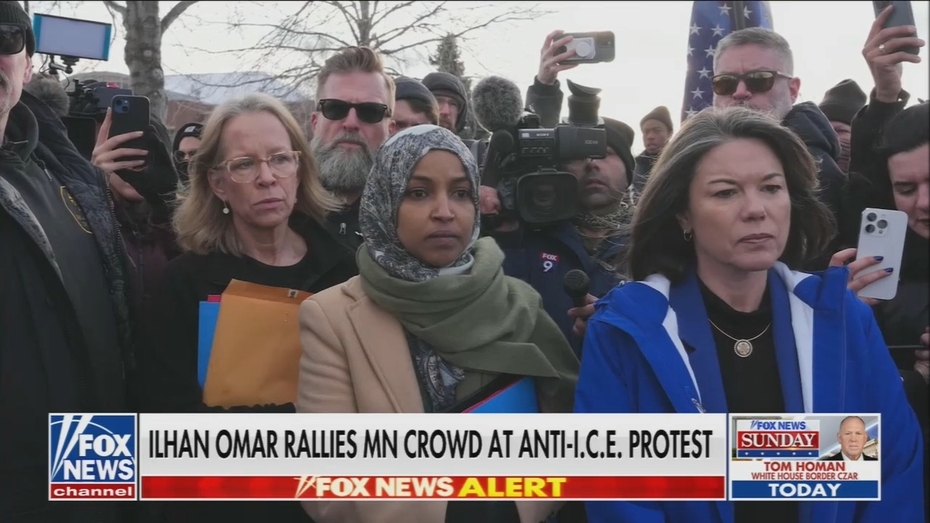
“He’s trying to scare them and terrorize them every single day,” she said. “And what we know is that Somalis are not intimidated.”
None of Omar’s many controversies were considered worth a mention. She just leads an embattled community.
After recognizing Minnesota as a mostly welcoming place for immigrants, the Times conjured up a new authoritarian vibe in Minneapolis as ICE enforces immigration law.
In 2016, after President Trump denounced Somali refugees at a nearby campaign rally, the Dar Al-Farooq mosque in Bloomington, Minn., which has a largely Somali congregation, began receiving threatening emails and calls. The harassment peaked in 2017 when a white supremacist bombed the mosque.
The last few weeks, though, have felt altogether different.
Armed immigration agents have been marching through apartment complexes and shopping malls, demanding to see documents and handcuffing some people. Black tinted S.U.V.s have circled residential blocks while local volunteers kept watch and blew whistles to warn others in the neighborhood that the agents were coming.
Even when the talk turned to the viral video alleging fraud among so-called child-care centers, the Times made the story not journalism about fleeced taxpayers, but emotions over how the scrutiny made Somalians in Minnesota feel.
Although Mr. Trump had been making bigoted remarks about Somalis for some time, declaring that “they come from hell” and “we don’t want them in our country,” the deep chill in Minneapolis set in following the posting of a viral video that purported to expose extensive fraud at Somali-run child care centers in Minnesota.
The story ended on a plea from a Somali-American to believe in the goodness of America despite its Trumpian leadership.
“I thought they would stop after killing Renee Good, but they are still out here harassing people,” Mr. Muse said later Friday afternoon, after the federal agents had left. Still, he said, he believed there were limits to what the administration could do.
“This country is better than they think it is,” he said.
Well, he’s a step ahead of the journalists who denigrate both America and its current leadership.