Lefty outlets like Bloomberg News have shown a tendency to dial up the economic scareporn in a midterm election year precisely so they can swing the electorate, regardless if they eventually end up looking like idiots when their half-baked foreboding falls apart.
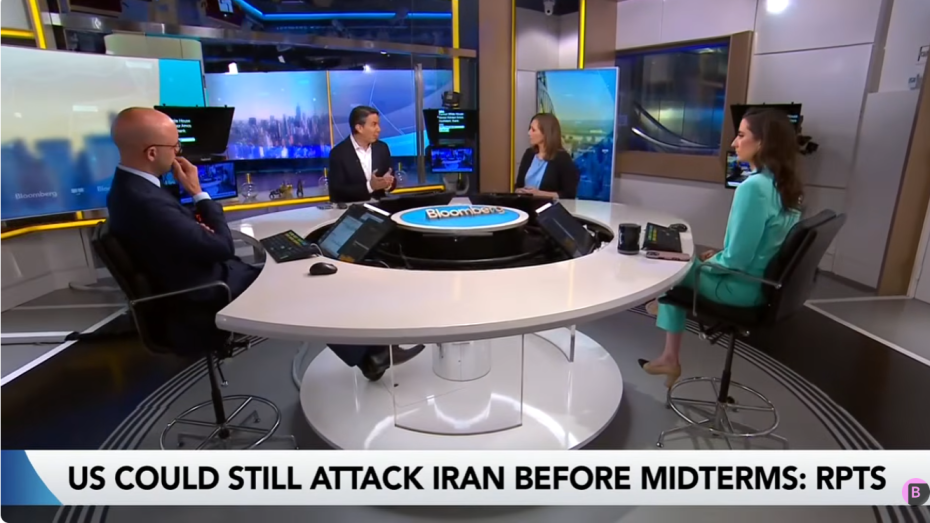
Bloomberg News was adamant in May that the military conflict over the Strait of Hormuz in Iran could constitute a “recession rivaling the great financial crisis” if it wasn’t open by August.
Oooooops.
Well, the conflict is still ongoing as of October 12, the Strait is still in dispute, and the odds of a recession have plunged to seven percent, according to Polymarket. In fact, according to a survey conducted by American Beacon Advisors on the economic pulse for the second half of 2026, “Respondents do not anticipate an economic contraction: 88% put the odds of a U.S. recession in the next 12 months at 25% or less, and not one respondent put the probability above 50%.”
Sports betting company Kalshi just reported October 11 that the odds of a recession have collapsed to “nearly 0%.” This follows a string of recent economic developments signaling stronger than expected GDP growth in both the first and second quarters of 2026, despite the aftershacks of roiling energy markets over the ongoing Iran War. The upshot, as The Wall Street Journal editorial board pointed out September 30, was that “the economy as a whole looks to be on a stronger footing than during the Biden years when growth was driven by government handouts.”
If the Strait of Hormuz doesn’t open by August, there may be a risk of a recession rivaling the great financial crisis. https://t.co/aY6yAYm5Ja
— Bloomberg (@business) May 21, 2026
In essence, Bloomberg News dubiously went out on a limb and ended up hanging itself with its own propaganda:
It’s been almost three months since the start of the Iran war and its concomitant blockage of the Strait of Hormuz. Energy prices have spiked all over the world, and fear is rising about what comes next for the global economy. Well, if the strait doesn’t open by August, markets may find out the hard way. So says Rapidan Energy Group, which warned the continued closure of the waterway through summer raises the risk of a recession that may rival the global financial crisis.
But even St. Louis Federal Reserve data, based on the most recently available numbers in August 2026, put the odds of a recession at a mere 0.08 percent, which is practically negligible.
BREAKING: Odds of a recession this year plummet to nearly 0% https://t.co/IdsnOjHn9j
— Kalshi (@Kalshi) October 11, 2026
As MRC Business summarized in May, basing a long-term recession call on volatile energy markets and a region supplying just 7 percent of U.S. crude is like a weatherman declaring a Category 5 hurricane in late summer because it drizzled in his backyard in spring. Newsflash to Bloomberg News: It’s still just drizzling.