The New York Times seemingly never fails to channel the energy of its infamous Soviet propagandist Walter Duranty when it comes to simping for regimes hostile to the U.S., including Iran.
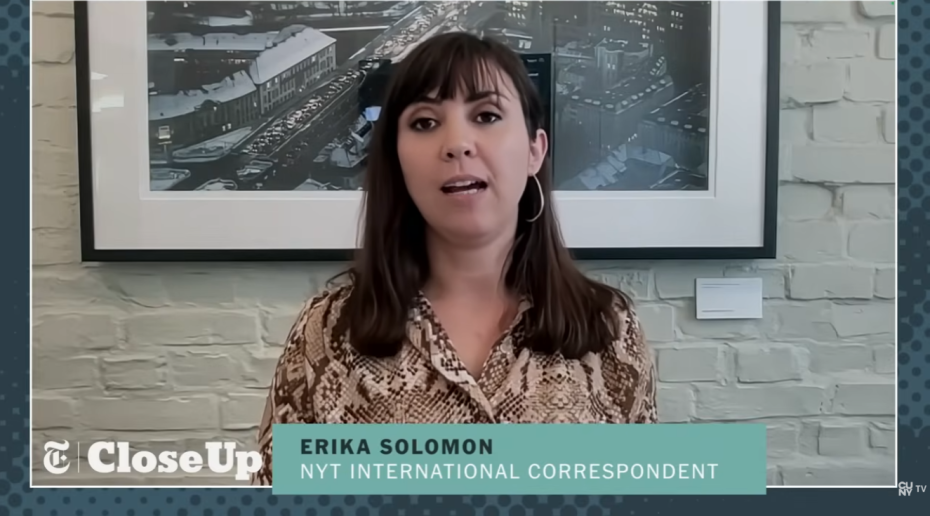
Times Iran bureau chief Erika Solomon and reporter Sanam Mahoozi, who served as co-author, came out swinging August 25 against Treasury Secretary Scott Bessent’s announcement of “Operation Economic Outcast” to crush Tehran’s remaining economic lifelines as the Iranian rial plunged to record lows. In Solomon and Mahoozi’s twist, Iran is just a cornered tiger ready to up the ante in military escalation: “Iran May Have Little to Lose as U.S. Tries to Squeeze Its Economy.”
Solomon and Mahoozi proceeded down this track, arguing that “As Iran’s ever more devastating economic crisis deepens, experts warn, Iranian leaders may feel they have little to lose by responding to U.S. pressure with the kind of military escalation President Trump now seems keen to avoid.”
The problem? Iran doesn’t even truly believe it has “little to lose.” Just two days ago, the Institute for the Study of War released an analysis showing that following OEO, “The Iranian regime is attempting to find routes to alleviate economic pain while simultaneously trying to deter and prepare for potential social unrest in response to compounding economic pressure.” In fact, Iran expert Jonathan Harounoff just told Fox News Digital that the OEO “pressure campaign will likely continue to cripple the regime and set the stage for perhaps yet another domestic uprising.”
An Iranian regime that’s supposedly ready to just go scorched earth! against the U.S. while simultaneously trying to lick its economic wounds and being wary over another possible uprising on the domestic front doesn’t make sense.
But Solomon and Mahoozi just mindlessly regurgitated the ramblings of wild-eyed Iranian officials who can do nothing but try to make the paper tiger look like it still has fangs: “In statements broadcast after Mr. Bessent’s news conference, Iran’s economy minister, Ali Madanizadeh, warned that the country would find ways to push back.”
Push back with what? As United Against Nuclear Iran policy director Jason Brodsky implied to Fox News, raving like a crazy person on state TV doesn’t necessarily translate into legitimate retaliatory force capability:
The answer is this iteration is taking place against a backdrop where there is a synchronization of economic and military pressure against the Iranian regime — a combination which has never been deployed by a U.S. administration until now. The U.S. naval blockade currently in place against Tehran is unprecedented. The Iranian regime's industrial base — for example, steel plants — has also been damaged following kinetic strikes. The Iranian regime’s military capacity has likewise been degraded.
Solomon and Mahoozi are willing to ignore the disparity between the Islamist regime’s threats and their current capability, especially if its own people are not walking lockstep. As Brodsky concluded, “The regime's risk tolerance may be increasing, but so is its desperation. The drivers pushing the Iranian people into the streets to protest have only gotten worse since January — with political, economic and social forces all deteriorating.”
This is like a boxer talking smack to his opponent in a press conference while visibly limping from chronic sciatica. But no one would get that imagery reading Solomon and Mahoozi‘s spin. In fact, the damage to Iran’s military capability was so devastating that retired U.S. Army colonel L. Scott Lingamfelter assessed August 24 that “if there had been no pause in the conflict in April to engage in peace overtures, Iran’s regime would have collapsed by now.”