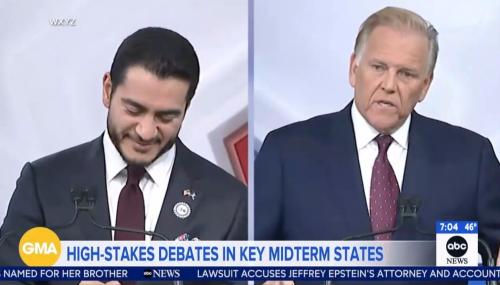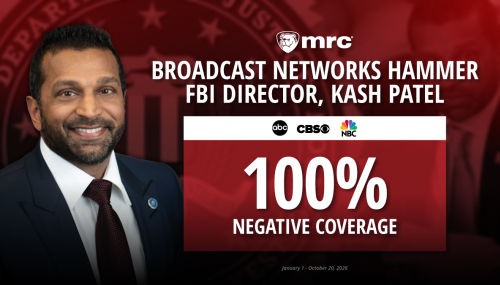
The fight to get the Federal Communications Commission to deny the renewal of broadcast licenses for eight ABC-owned affiliate stations continues. In a scathing, 24-page reply to ABC’s opposition to their petition to the FCC, the Media Research Center took on the number one broadcast network in America for their “unlawful misuse of publicly licensed spectrum,” and called them out for trying to mislead the Commission.
“ABC’s opposition to the MRC petition effectively boils down to a ‘squatters rights’ argument,” wrote MRC President David Bozell. “Someone else may own the property, have the statutory right to license the property, and bear the responsibility to ensure the property is well maintained, but ABC seems to believe it has an entitlement to control the property in perpetuity.”
He added: “But broadcast spectrum is publicly owned, and a license to use it is a limited-term privilege conditioned on compliance with statutory and contractual obligations.”
The MRC’s reply points out that, in their opposition filing, ABC refused to address the evidence of how they abuse their airwaves to electioneer on behalf of one party, spread misinformation for a partisan agenda, and justifies political violence:
First, contrary to ABC’s characterization, MRC’s petition does not concern mere ideological bias. It documents a repeated pattern of conduct relevant to renewal, including direct partisan electioneering, dissemination of misinformation, and broadcasts minimizing or appearing to justify political violence. Second, ABC’s First Amendment arguments rest on a mistaken characterization of both the petition and the governing law. Third, ABC’s standing objection fails because MRC and the individual signatories are interested parties under the applicable standard. Fourth, commenters’ predictions that nonrenewal would eliminate local programming in New York and Connecticut are meritless and assume that no other broadcast news organization would be interested in the market.
“ABC promised to uphold the public interest, but then refused to do so. On this record, the Commission should conclude that renewal is not warranted and should permit a qualified successor licensee to serve the public,” Bozell declared.
In an effort to make sure the FCC stays on track, the MRC cautioned the Commission not to fall for ABC’s subtle inference that they are arguing for a return to the “inapposite fairness doctrine:
In its efforts to wrench permanent control of broadcast spectrum from the public, ABC’s opposition mischaracterizes MRC’s legal arguments and fails to address most of the evidence. The Commission should focus on the issues actually presented, rather than on ABC’s references to the inapposite fairness doctrine or its misstatements of governing law or its mischaracterizations of MRC’s arguments.
“Because continued use of public spectrum is not an unconditional entitlement, and because the First Amendment does not bar the Commission from enforcing the law, the Commission should grant the petition,” the MRC concluded.