Like a moth to a flame, the anti-Trump fanatics over at Forbes fried their brains trying to make the trend of falling gas prices seem like a bad thing for President Donald Trump, as if higher prices were somehow better.
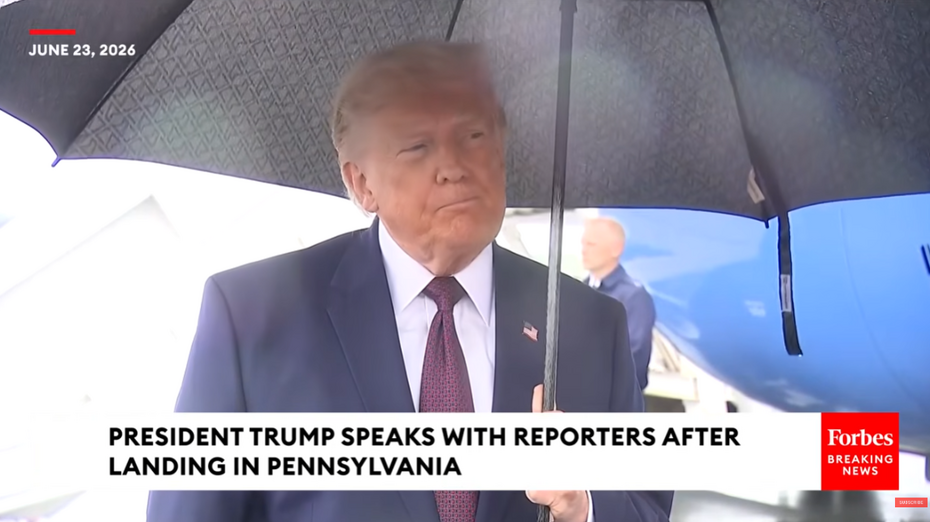
Forbes “breaking news reporter” Ty Roush tripped over himself to flip the script on Trump June 24 as the opening of the Strait of Hormuz in Iran is currently being negotiated, and ended up faceplanting in the process: “Strait Of Hormuz Reopening Could ‘Overheat’ Economy And Inflation, Analyst Warns.”
The brain hurt in Roush’s speculative spin was palpable: “The reopening of the Strait of Hormuz may further ‘overheat’ the economy, potentially resulting in higher inflation and prompting the Federal Reserve to hike interest rates.” Gas prices have sunk 14 percent over the past six weeks since their May highs, according to the New York Post June 23. Apparently, per Roush’s logic, relief at the pump is nothing to celebrate over despite the media kvetching for months that the Iran War was supposedly going to cause a cataclysmic oil price shock.
Somebody, please make it make sense. Even prominent anti-Trump critic and Axios chief economic correspondent Neil Irwin admitted in a June 24 piece headlined, “Why the Iran oil shock hasn't walloped U.S. growth,” that the notion of the Strait of Hormuz kerfuffle sending oil markets into a 1970s-style price gouge turned out to be just a bunch of media noise: “It hasn't happened, and that reflects a central shift in how the U.S. fits into global energy markets.” Irwin continued: “Turns out, when you produce your own energy, an oil shock doesn't hurt the way it used to.”
Wow, who knew!
It’s worth noting that much of the wild-eyed price fluctuations markets have witnessed the past couple of months were caused by myopic commodity traders trading off of scary media headlines, as Fox Business senior correspondent Charles Gasparino stated on March 8. None of that had anything to do with market fundamentals. I made this case on the NewsBusters Podcast over a month ago.
The logic follows that once the conflict is eventually settled, the energy price metric would fall like a rock as the current trend suggests and drag inflation down with it. But that’s no longer the case apparently if you’ve been reading the clownish Forbes take.
Roush parroted the musings of Apollo chief economist Torsten Sløk, who is on record admitting in 2025 that “The consensus” about how Trump’s tariffs would send the economy into a tailspin were dead wrong and that “We in the economics profession need to look ourselves in the mirror.” Apparently he didn’t look long enough, and decided to take the scareporn to another level and Roush was apparently itching to regurgitate it. Roush pushed how Sløk wrote “in a note the ‘narrative in markets is changing’ and that lower oil prices, once viewed as helping alleviate inflation, could increase demand in an ‘already overheating economy’ and produce higher inflation, not lower.”
This is all just spitball speculation, of course — not “breaking news” as Roush’s byline would suggest. Irwin, in his writeup, pointed to new research by the Dallas Federal Reserve illustrating how relatively minuscule the Strait of Hormuz’s impact was on overall U.S. GDP, indicating that the American economy today is “less vulnerable to such disruptions” than in decades past predominantly because it “reduced its dependence on oil and changed from a major net oil importer to a net oil exporter.”
But by Roush’s logic, prices are villainous regardless of which direction they’re going. This is enough to shave a few IQ points off of anybody who even just has a cursory understanding of how math works.