There was an obvious answer to this question exhibited in far-left influencers like Hasan Piker, but Tur cited a New York Times column which blamed the lack of protests on “social media and AI-driven apathy.”
Tur, with a somewhat raised voice, started with a question about the low presence of young Americans at protests, which included the No King’s protests:
But curiously, unlike other unpopular American wars or actions, this one has not yet spurred major protests. Where are the Americans on the street saying they don't want this? Specifically, the young Americans. They largely were not at the last No King's protest, where the average age was 48 years old, according to the School of International Service at American University, which tracks anti-Trump protest demographics.
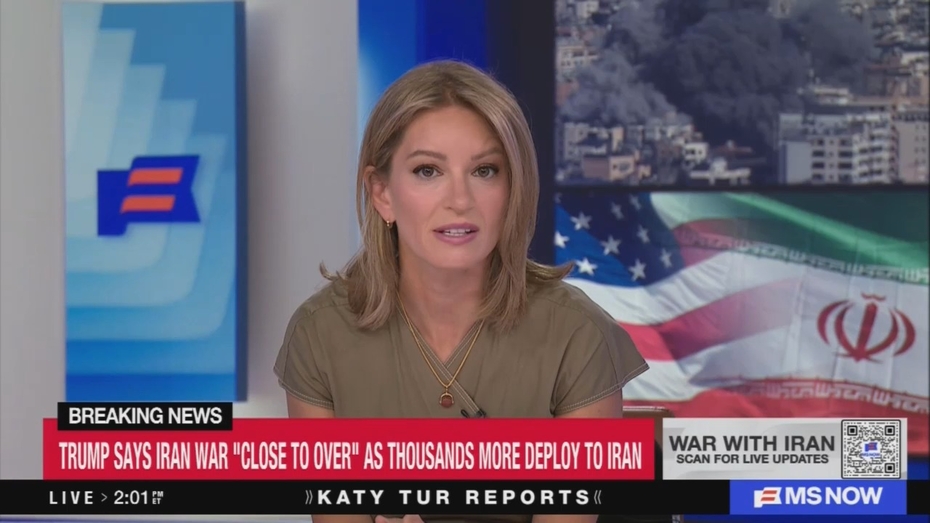
MS NOW's Katy Tur wonders why there are no anti-Iran War protests at college campuses compared to anti-Israel protests.
— Nick (@nspin310) April 15, 2026
Instead of the obvious answer, she blames it on AI and "scrolling," not the bright flashing light exemplified in far-left influencers like Hasan Piker. pic.twitter.com/xFC04Mx3CM
Tur compared the lack of the protests to the prevalence of anti-Israel and, very often, seemingly pro-Hamas protests seen after October 7, 2023:
After all, two years ago, we saw a number of loud demonstrations and sit-ins over Gaza. President Biden got flamed by young Americans over it. So again, where are they today?
Instead of the obvious answer of growth of anti-Semitism on the left after the October 7th attacks, best exemplified in the rise and prevalence of streamer Hasan Piker, who at a Yale event on April 14 said the fall of the Soviet Union was a bad thing, she cited a NYT column that placed blame on technology:
Writing for The New York Times opinion page, Thomas Edsall asked that very question. The answer he got from a number of experts that he interviewed was it's all driven by social media and AI-driven apathy, a feeling of helplessness and immobility.
She later quoted from the NYT article, which worried, “The collapse of the student activism and the lack of a thriving youth movement in opposition to Trump are a canary in the coal mine, warning of the deterioration of American exceptionalism, however imperfectly realized, which a vigorous citizenry relied on to make this country great in the first place.”
Again, no real mention of the rise of anti-Semitism in the article or from her.
Lauren Egan, a reporter from The Bulwark, placed blame on a Trump Administration crackdown against campus protests, as she stated, “I do think there are some real structural issues that are making the stakes a lot higher for college kids to protest in the way we saw back during the Biden administration.”
Egan also admitted left-wing activists feel they have more push in Democratic politics: “A lot of these activists feel like they have more sway, and I think they are correct about that with Democratic officials as opposed to Republicans.”
Tur followed with one more push and wondered why there were still Gaza protests, but not Iran:
We still see Gaza protests on the streets of New York City in Times Square pretty frequently. And those are attended largely by young people. But there's not that young revolt over, Donald Trump's action in Iran. And when Democrats say they're frustrated by it, I wonder, are they trying to do anything about it?
Tur, host of a supposed hard news daytime program, pretty clearly and directly pushed for young American college students to protest their apparent disdain for the war. But maybe she would get closer to putting her finger on the actual issue of why there were so many more far-left, keffiyeh-wearing protestors, but that might be unlikely.
The transcript is below. Click "expand":
MS NOW’s Katy Tur Reports
April 15, 2026
2:01:30 PM Eastern
(...)
KATY TUR: But curiously, unlike other unpopular American wars or actions, this one has not yet spurred major protests. Where are the Americans on the street saying they don't want this? Specifically, the young Americans. They largely were not at the last "No Kings" protest, where the average age was 48-years-old, according to the School of International Service at American University, which tracks anti-Trump protest demographics. After all, two years ago, we saw a number of loud demonstrations and sit-ins over Gaza. President Biden got flamed by young Americans over it. So again, where are they today?
Writing for The New York Times opinion page, Thomas Edsall asked that very question. The answer he got from a number of experts that he interviewed was it's all driven by social media and AI-driven apathy, a feeling of helplessness and immobility
As Derek Thompson put it, "scrolling has a funny way of immobilizing its user, numbing their mind, and producing a kind of disembodied timelessness." Not great. Which, Edsel concludes, "gives authoritarian leaders in the Trump mold an easier path to smash norms and grow stronger." Quote, “The collapse of the student activism and the lack of a thriving youth movement in opposition to Trump are a canary in the coal mine, warning of the deterioration of American exceptionalism, however imperfectly realized, which a vigorous citizenry relied on to make this country great in the first place.”
Let's figure it out. Joining us, New York Times diplomatic correspondent Michael Crowley, reporter at The Bulwark, Lauren Egan, and editor-in-chief of Foreign Policy magazine and host of FP Live, Ravi Agarwal.
We're going to do things in reverse today. I'm going to go right to what we ended with and start with you, Lauren, and talking about this AI, social media-driven apathy, and what it means in the larger respect for this democracy. Again, we're not seeing people on the streets, young people demanding that this war end.
LAUREN EGAN (THE BULWARK): Yeah. Look, I think one thing that's important in context in all of this is that it's a very different situation than what it was during the Biden administration, when we saw all those protests really sparked on college campuses. Trump has made it clear that he's going to crackdown against protesters. He's threatened to withhold federal funding from schools that don't keep protests in line. We've seen some universities even before Trump was reelected start to change rules on campuses in terms of how people can protest.
So, I do think there are some real structural issues that are making the stakes a lot higher for college kids to protest in the way that we saw back during the Biden administration. But it's definitely a frustration that I hear a lot from Democratic officials when I'm talking with them who say, look, a lot of protesters, a lot of the, you know, most energized and engaged activists, they want to push us when we're in office. But when it's a Republican, they're, you know, where is the outrage?
And I think that stems from a bit of a sense that Democrats are more malleable. A lot of these activists feel like they have more sway, and I think are correct about that with Democratic officials as opposed to Republicans. But you're absolutely right. The "No Kings" rallies have been a lot older.
On the bright side for Democrats. When I talk to officials about this, they say, look, young people still are showing up to vote in some of these special elections. And that's giving them hope that this is not, you know, a bad sign for midterms or going to lead to a lower turnout than what they would hope for.
TUR: Yeah. I mean, I take your point on the structural issues for campus protests, but, you know, we saw a lot of young people show up to the protests in Minneapolis against ICE in particular. We still see Gaza protests on the streets of New York City in Times Square pretty frequently. And those are attended largely by young people. But there's not that young revolt over, Donald Trump's action in Iran. And when Democrats say they're frustrated by it, I wonder, are they trying to do anything about it?
(...)