The First Amendment to the United States Constitution addresses the subject of free speech head on. As follows:
“Congress shall make no law respecting an establishment of religion, or prohibiting the free exercise thereof; or abridging the freedom of speech, or of the press; or the right of the people peaceably to assemble, and to petition the Government for a redress of grievances.”
This reminder comes as, for the 250th time, America gets ready to celebrate the Fourth of July. And in that doing, it is decidedly worth a look back to see the thoughts of the nation’s Founding Fathers when it comes to a free press. Or, as it is referred to in today’s world, “the media.”
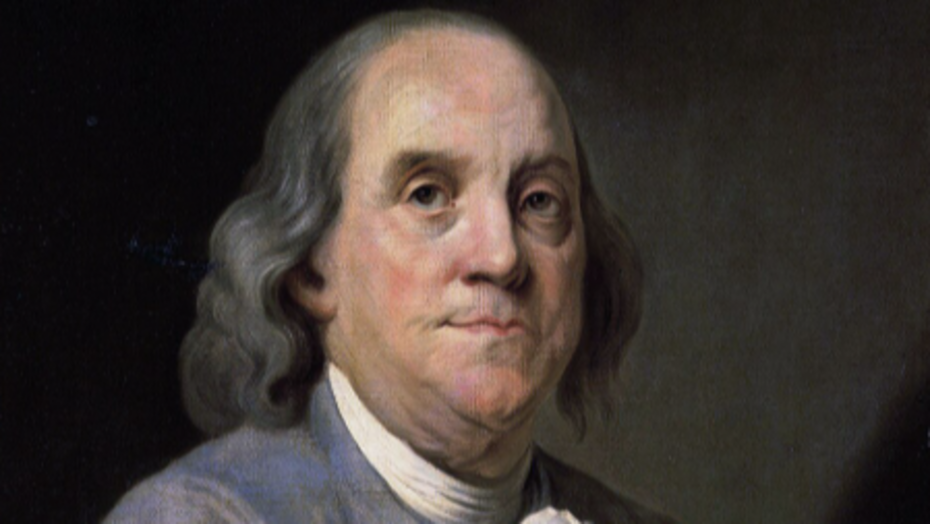
The liberal journalist and author Walter Isaacson wrote a decidedly noteworthy book on old Ben. The one that is appropriate for this annual July 4th celebration is Benjamin Franklin: An American Life.
Isaacson makes a point of discussing Franklin’s relationship to the creation of a free press and the larger world we call the media. Key to this creation was what Franklin termed “The Junto Club”. The Benjamin Franklin Historical Society defines the Junto Club as follows:
“In the fall of 1727 Benjamin Franklin and a group of friends founded the Junto Club also known as the Leather Apron Club. The 12 members were tradesmen and artisans who met Friday evenings to discuss issues of morals, politics or natural philosophy. The club lasted 38 years. Franklin proposed that the group be formed of “ingenious men –a physician, a mathematician, a geographer, a natural philosopher, a botanist, a chemist, and a mechanician (engineer)”.
Isaacson also notes:
“Franklin was doing modestly well as one of three printers in a town that would naturally have supported only two. But he had learned from his apprentice days in Boston that true success would come if he had not only a printing operation but also his own content and distribution network.”
Franklin had competition in this area, however. A publisher named Andrew Bradford. Isaacson writes:
“Franklin decided to take Bradford on, and over the next decade he would succeed by building a media conglomerate that included production capacity (printing operations, franchised printers in other cities), products (a newspaper, magazine, almanac), content (his own writings, his alter ego Poor Richard’s, and those of his Junto), and distribution (eventually the whole of the colonial postal system).”
In other words, long, long before the arrival of the 20th and 21st century and the media companies built in today’s world by men with names like Rupert Murdoch (Fox), Chris Ruddy (Newsmax), William S. Paley (CBS), David Sarnoff (NBC) or Bill Gates (Microsoft) and Steve Jobs (Apple), there was old Ben Franklin in his very competitive fashion launching a media company of his own. Designed specifically by Franklin to embrace the technology of the day (printers), and then content (a newspaper, magazine and an almanac.)
Now? So now America - and the modern world - swims in a media ocean of newspapers, television and radio networks. Not to mention computers! The technological descendants of Ben’s printers.
The bottom line? Even though there are those griping about this, that or another media outlet (including me!), this July 4th is a good moment to stop and understand just how fortunate we Americans are. Fortunate to live in a country where a free press and all that that means -- for the good, bad and indifferent -- allows them to read, write and broadcast what they chose.
Said another way?
Long live a free press. And God Bless America. Happy Fourth of July.