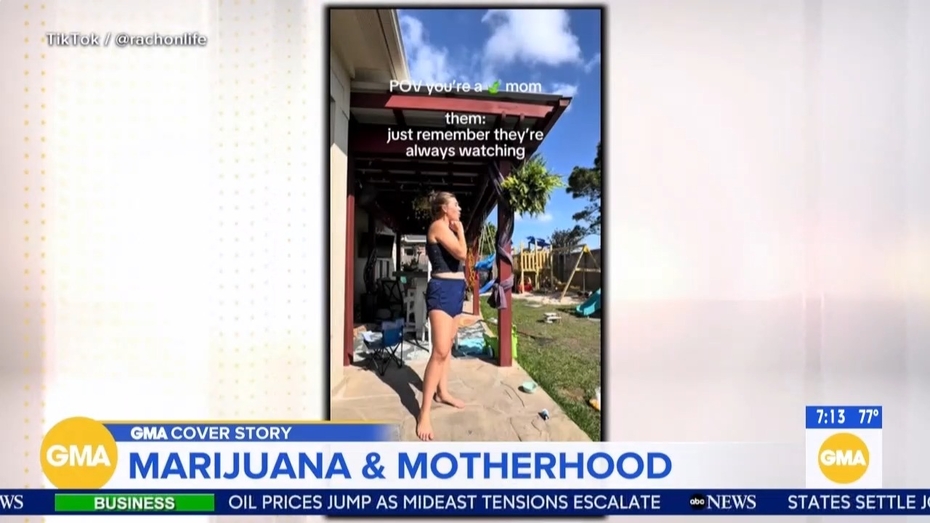
In one of three teases, co-host Robin Roberts boasted of a story on “the moms who say marijuana makes them better parents” and then, in the others, co-host Michael Strahan touted the “high on parenting” trend from “Garden Moms…racking up millions of views” arguing “pot helps them parent.”
Only then did Strahan say chief medical correspondent Dr. Tara Narula would weigh in on “what parents should know about the risks.”
“We’re back now with our GMA Cover Story on moms turning to marijuana because they say it makes parenting easier. They call themselves garden moms and they’re increasingly open about it online,” Strahan began.
Yesterday, ABC's 'Good Morning America' had a full story giving oxygen to this supposed TikTok trend of moms becoming stoners, smoking marijuana to deal with the stresses of motherhood.
— Curtis Houck (@CurtisHouck) July 10, 2026
While the second half was incredibly critical of the trend, the framing at the on-set did… pic.twitter.com/CtrK6oGCo3
Narula teed it up as a move “a growing number” of women view as akin to “turn[ing] to that glass of wine after putting their kids to bed.”
“They’re using it during the day, but healthcare providers caution not so fast,” she added.
Narula and her team next had a number of soundbites from one such user, “Texas mom of two and content creator Rachel Gibbs,” who insisted she and other potheads are “using this as a tool” and “not…to escape,” “be bad moms,” or “get away from our kids”
If you’re having to provide all those qualifiers, that’s a safe sign you know what you’re doing is wrong.
“Texas mom of two and content creator Rachel Gibbs says cannabis doesn’t check her out of motherhood, but rather helps her to check in and quiet the static in her head,” Narula added.
Narula gave Gibbs ample space (alongside two other TikTokers) to sing the praises of doing hard drugs (click “expand”):
GIBBS: It almost, like, turns the background noise off. I’m not zoned out. I’m not in the fridge all day long. I’m not just, like, sleeping on the couch. My kids aren’t running around. Like, that’s — that’s not it.
NARULA: And she says its impact on parenting her three and five-year-old kids has been tremendous.
GIBBS: I can get down to their level. I have more patience. It’s calmed the nerves down. It’s calmed the fight or flight. It’s now in — freeze and let’s work it through together. Like, we’re on the same team.
NARULA: Rachel is far from alone.
TIKTOK USER AMYZWRLD: I know a lot of people hold shame, and I’m here to take that out of it. Gardening makes me a better parent.
TIKTOK USER TESS_UHHHHH: You already know coffee and coffee time, baby.
Naraula says the trend is known by the hashtag “CanaMoms or Garden Moms” with Gibbs also relaying “she uses cannabis four to five days a week” with “hard rules around its use.”
Gibbs provided more assurances pot use is something that can be done responsibly with children a short walk away: “If I am using cannabis, there is another adult home. I’m never driving under the influence ever. We do not ever have, like, actual cannabis out around our children. They do not see it.”
It was only at this point did Narula pivot to pointing out the litany of negatives and dangerous outcomes for marijuana use.
In particular, an APA official noted that, a mother may think it’s calm at home, but something such as a sudden medical emergency involving a child could impair their ability to seek help (click “expand”):
NARULA: While more than 64 million Americans have used cannabis in the past year, approximately three in 10 people who use cannabis have cannabis use disorder. Addiction specialists suggest it shouldn’t be thought of as a harmless alternative to alcohol. It also carries health risks, potentially affecting mood, memory, attention, and heart health among others.
APA COUNCIL ON ADDICTION PSYCHIATRY CHAIR DR. LIEF FENNO: Alcohol and marijuana both impair reaction time, they impair decision making, and if, you know, someone is taking charge of the care of a young child or some children, they may need to engage in life-saving care, make emergency decisions, operate a motor vehicle safely, and the regular use of marijuana before engaging in those behaviors can — can impair your ability to do so.
Back live, Strahan provided more positive framing: “[W]hat does the science say about marijuana’s ability to help moms focus and free themselves of self-stress and anxiety?”
Narula dismissed it:
[T]he doctor we interviewed was very clear in saying medicine is — cannabis is not medicine…The most, latest research study we have is actually from this past year that looked at cannabis in its relationship to mental health disorders, and it was a big review, 50 studies that were out there, and they did not find any benefit in terms of anxiety, PTSD, or psychotic disorders.
Narula further pointed out that, “in high doses, cannabis can actually cause anxiety, paranoia, psychosis” and [c]hronic use can lead to depression, alterations in your sleep, where you’re sleeping more, and so, then we think about cardiovascular risks. So many people don’t know about this, but we in the cardiology world talk about it, there is actually a link between cannabis use, no matter how you use it, smoking or eating it with heart attack, stroke, heart failure, and arrhythmia.”
Roberts joined Strahan in trying to turn the focus back towards some sort of positive conclusion (click “expand”):
ROBERTS: Yeah, okay, so the mom was watching right now — moms are watching right now, and perhaps they’re — they’re curious. What do you want them to know?
NARULA: Yeah, I think the biggest things we talked about the risks are moms, but let’s talk about the risk to kids. So, the American Academy of Pediatrics says you should not be using in front of your children, because that normalizes substance use.
STRAHAN: Mmhmm.
NARULA: You don’t want to be smoking, because they could get exposed to secondhand smoke. You want to keep the edibles and gummies and things locked up and out of reach, and then the biggest issue is what you heard in the piece, which is, does it impact their decision-making, impair judgment, reaction time, if they’re driving a car?
STRAHAN: Yeah.
ZEE: Yes, exactly.
NARULA: The doctor we interviewed made a great point, which is if you were leaving your kid with a daycare worker, or a nanny, or a teacher who had just used, would you feel comfortable with that? So, questions to ask.
ROBERTS: Mmhmm.
STRAHAN: And if you have to question it, most parents, of my opinion, say no to.
Closing out the segment, weatherman Sam Champion declared: “Eye-opening. I got to say that was one of those conversations you weren’t expecting, but really good combo!”
To see the relevant ABC transcript from July 10, click here.