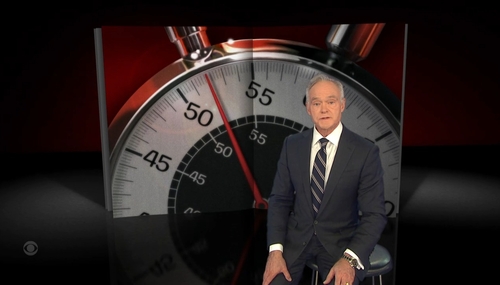
It was either an effort to avoid blaming individuals for ill-advised borrowing or an effort to vilify the banking system, but a segment on the April 20 "CBS Evening News" took a very one-sided view of credit-card lending.
On a day bank stocks struggled and dragged the Dow Jones Industrial Average (DJIA) down nearly 300 points, "Evening News" scrutinized the current state of the banking system's credit-card lending. According to anchor Katie Couric, that sell-off of bank stocks occurred as a result of the realization the institutions would be forced to cover bad loans.
"Wall Street had been on a six-week winning streak, but today it suffered its worst drop in two months as investors rushed to sell bank stocks," Couric said. "[T]he sell-off came after Bank of America reported earnings of more than $2.8 billion last quarter, but that good news was offset by the word that the bank has set aside more than $13 billion to cover its losses from bad loans made in the past."
One concern some investors had about the banks, which Couric neglected to point out, was a report in the April 20 New York Times that the Obama administration may convert federal loans to the banks into common stock, giving them more power to control the institutions. That is a threat Glenn Beck pointed out on his April 20 Fox News show and a reason bank stocks struggled in trading.
Instead, Couric pointed to credit cards and the pressure the banks were feeling to counteract bad credit card debt through other means.
"Many banks are piling up red ink from credit cards and consumers are paying the price," Couric said.
The segment by CBS correspondent Anthony Mason focused on the risk of credit card lending by banks, in a time when unemployment is rising.
"For banks, plastic has become a problem," Mason said. "As unemployment is soaring, so are the banks' losses on credit card debt."
Mason explained that as the rate of uncollected credit card loans has exceeded 8 percent for all banks and 9 percent for the larger beleaguered institutions, they were attempting to make up for these losses by raising interest rates and fees. And Mason reported that credit card companies have increased interest rates and minimum payments, while dropping credit limits and closing some accounts altogether.
"With bank losses on bad credit card loans up nearly 50 percent over the past year, it's estimated the banks will cut limits on credit cards for consumers by $2.7 trillion, Katie," Mason said.
Couric responded that it didn't seem fair because many of the banks in question received taxpayer TARP bailout money, and then the banks were penalizing taxpayers. But Mason assured the "Evening News" anchor the government was on the case as President Barack Obama will convene a summit of credit card executives on April 23.
"Well, the banks are desperate Katie," Mason explained. "But of course, this is really hurting people especially people who are already in trouble, who may have lost their job - for whom credit cards are kind of the last safety net. This is why the president is getting involved and the White House said tonight the president will in fact himself be at the meeting on Thursday with credit card executives."
However, on CNBC's April 20 "Power Lunch," co-host Michelle Caruso Cabrera, Bill Griffith and Dennis Kneale said the banks can't be completely faulted and held culpable for acting in their best interests, with the economy as it is.
Caruso Cabrera explained that tightening up on credit cards was part of the de-leveraging process, which banks were in some cases leveraged 40-to-1, causing the current banking crisis.
"Hold on though - we know they have been yelled at that they were over-leveraged," Caruso Cabrera said. "They must reduce the amount of leverage that they have. They must allocate credit in some way. So what do you do? You raise the cost of it. It's that simple. It's a price-allocation system."
And Griffith pointed out that throughout their history credit cards have by nature been a source of quick credit with a high cost.
"Credit card rates have always, always, always been high, I mean relative to the prevailing rates, ridiculously high for two reasons," Griffith said. "One, it helps them offset the losses they have to incur as a result of the amount of money they lend to people who can't pay it back. And, number two, let's face it - they're that high because we pay them."
And Caruso Cabrera brought up the personal responsibility/behavior factor.
"You're right - credit card debt is like smoking," Caruso Cabrera said. "You have been told all your life it is bad for you and some people do it anyway."
Kneale questioned the motives of government and media going after credit card lenders. "Why is this a story now?" he asked. "Why is there suddenly a big crisis with the credit card companies? Are there not already enough laws in place regulating the card companies? It's because Washington has bailed out the banks and Washington has a new foot in the door to start throwing its weight around trying to cap the rates."