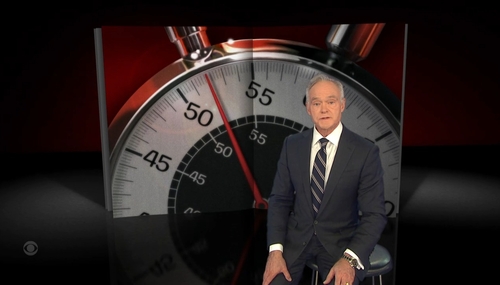
Jon Stewart Again Goes After Wall Street to Cover for Teachers Unions
The left-wing comedian Jon Stewart is at it again after ripping conservative Republicans for going after public sector collective bargaining. Stewart updated the situation in Wisconsin Thursday night on the "Daily Show," reporting on Wisconsin Gov. Scott Walker introducing his new budget proposals.
"He has put public sector unions on notice, and particularly teachers, that the gravy train is over – even if the gravy is actually lunchroom cafeteria-grade gravy-like rehydrated soy chips," Stewart spun, painting the comfortable pensions and benefits of Wisconsin public school teachers as dog food compared with infamous Wall Street bonuses. He also shifted the debate – instead of going after public sector unions, conservatives somehow are anti-teacher, according to Stewart's logic.
Playing clips from CNBC, Fox Business, and Fox News as his cannon fodder, the comedian failed to give credence to the point that the public sector union benefits might indeed be unsustainable, and that not all people working on Wall Street are money-hoarding thieves. But he descended once again into his simplistic "Robin Hood vs. Prince John" tunnel vision.
Referring to people making over $250,000 a year, who were exempted from a tax increase this past January, Stewart sarcastically joked that "they're not big-shot teachers with their... desks, and seemingly endless supply of multi-colored construction papers."
He also ignored the fact that many of the Wall Street banks that received bailout money paid it back with interest.
"Bankers are not suckling from the taxpayers teat! Except, of course, for the billions of gallons of taxpayer bailout teat milk they sucked on so voraciously," the anchor snidely remarked. "We have got to pay those bailed-out firm CEOs top-dollar! Otherwise those companies could wind up being run by a couple of jackasses who f*** things up so royally it torpedos the entire global economy," he sarcastically ranted.
A transcript of the segment, which aired on March 3 at 11:01 p.m. EST, is as follows:
JON STEWART: It is a battle to balance Wisconsin's budget. Gov. Scott Walker has finally put his proposals on the table. He is, in addition to stripping teachers and public workers of most of their collective bargaining rights, cutting 800 million dollars from the Wisconsin public schools budget over the next two years, as well as restricting local municipalities the ability to make up property taxes to make up for any shortfalls. In essence, he has put public sector unions on notice, and particularly teachers, that the gravy train is over. Even if the gravy is actually lunchroom cafeteria-grade gravy-like rehydrated soy chips. (...) We all are in it together! All of us have to sacrifice! Teachers, teachers assistants, student-teachers, retired teachers, school janitors, Everybody has to sacrifice. Why teachers? Well, as Republicans and their kin in the media know – you gots to follow the money.
(Video Clip) (...) NARRATOR: We're talking a 90,000 dollar, nine months worth of work all-in package. Boy, it sounds pretty darn good to the 14 million people out of work. (End Video Clip)
STEWART: You know what? That does sound great to someone without a job. And did you know, you're not even going to believe this. Some of these fat-cat public school kids are getting a hot breakfast free every morning. I bet starving people'd like a piece of that action, don't you think? But point taken. These folks just want teachers to give back. Because they believe that $50,000 a year in salary plus medical and dental benefits are incredibly generous, bordering on avarice. And I imagine these same people will feel the same way about couples earning more than $250,000 a year being asked to allow the Bush tax cuts to expire so that they would have to pay a slightly higher federal income tax rate.
(Video Clip) LAWRENCE KUDLOW: Is the $250,000 income level really rich in America?
BRIAN KILMEADE: How can anybody claim if you make $250,000 that you're a millionaire?
FOX BUSINESS ANCHOR: $250,000 is not rich for a family of four sending kids to college. It actually is close to poverty.
Rep. MICHELLE BACHMANN (R-Minn.): People want to think that these are millionaires sitting in leather chairs lighting their cigars with hundred dollar bills. That's not what we're talking about. (End Video Clip)
STEWART: No that is not. (Laughter) Not when it comes to the Bush tax cuts. They're not big-shot teachers with their... desks, and seemingly endless supply of multi-colored construction papers. Oh, and their no. 2 pencils. I guess no. 3 pencils aren't good enough for your majesty. And don't even try – don't e-ven try – and compare teachers to Wall Street. No contest. (...)
See the difference? Regardless of the greed-based, almost slightly socio-pathic job bankers did wrecking our economy, those people were there every single day, 12 months a year. Not that nine month bulls***. And, we the taxpayers have a right to cut teachers' salaries and benefits. They work for us! Bankers are not suckling from the taxpayers teat! Except, of course, for the billions of gallons of taxpayer bailout teat milk they sucked on so voraciously. Hey, I wonder how those same people who would have the government limit teacher pay and benefits would feel about the government limiting CEO pay at bailed-out-with-taxpayer-money firms. (...) Absolutely. We have got to pay those bailed-out firm CEOs top-dollar! Otherwise those companies could wind up being run by a couple of jackasses who f*** things up so royally it torpedos the entire global economy. Would you want that to happen? I don't think you would!
- Matt Hadro's blog
- Login to post comments


Comments
A defeatist, or just angling for things staying as they are?
Submitted by Unsane on Fri, 03/11/2011 - 9:05pm.
We can't do that yet? Really? Are you SURE about that, or are you just hankering for the status quo ad infinitum?
I think we should. We need to dispense with this "one-size-fits-all (and if you don't fit, too bad)" nonsense that the educational system is intent on sticking to at all costs.
And we could get better teachers, but I don't think you would like the solutions I have in mind. Nor would the teachers' unions. Phase One would be to end all requirements for education courses for teaching certification, to be replaced entirely by apprenticeship. And if ti leads to the demise of "education departments" at universities across the country? Permit me to break out the world's smallest violin so that I may weep for them.
"CONSUMED DEMOCRACY RETURNS A SOCIALIST REGIME" - Slayer, "Fictional Reality", from Divine Intervention (1994)
We can't do that yet? Really?
Submitted by mamabear on Fri, 03/11/2011 - 11:48pm.
We can't do that yet? Really? Are you SURE about that, or are you just hankering for the status quo ad infinitum?
I cite as my evidence the fact that in some school districts, kids that want to attend the best schools have to enter a lottery. If they don't get picked in the lottery, they have to attend the other school they didn't choose, which is presumably usually a lower-performing school.
Would you like to bring some evidence to bear against the idea that we don't yet have the capacity to serve all students through private options?
I don't think the replacement of certification programs with apprenticeships would be a bad thing. Again, you choose to tell me what I'm going to think instead of paying attention to what I say. Maybe we can get you an apprenticeship in critical thinking!
mamabear
Submitted by Cool Arrow on Fri, 03/11/2011 - 11:55pm.
Church and private schools are doing it at far less than the $11,000/student Texas now pays.
Are you honestly claiming it can't be done, or claiming it can't be done with the current overkill of administration?
Remember, we're talking $330,000 for each class of 30.
I'm saying it can't be done
Submitted by mamabear on Sat, 03/12/2011 - 10:30am.
I'm saying it can't be done yet. We need to build more private schools. Those schools need to get themselves funding and boards of directors and staff and facilities, and accreditation (unless you'd like to remove accreditation requirements as well) and everything else that a private entities need to operate. If you want those schools to be small and nimble, able to cater to specific student needs, then we need a lot of them Here are some quick numbers. Currently there are around 64 million children in primary and secondary education in the US. About 12% of them are private or home schooled, leaving about 56 million kids in our public school system. So if you figure you want each of those kids to have a choice between, let's say, three different options, one of which is the public school competing with private options, and those private schools should be around 500 students, then you need-- about 75,000 new private schools, provided that they were perfectly distributed around the country and leaving no extra space. That would put about 80% percent of use children in private school, and 20% in public school. That, of course, does not guarantee that each child actually has a choice based on geography, etc. I'm saying, that's going to take a little while!What is your opinion, as an
Submitted by Miss_Me_Yet on Sat, 03/12/2011 - 11:16am.
What is your opinion, as an educator, to the idea of cyber classrooms? There can be a central location in each state where a teacher with state of the art equipment and latest technology is beamed out to age, grade and learning ability appropriate classrooms throughout the state.
The classrooms can be staffed by qualified ( to oversee large groups ) adults, sort of like camp counselors.
There would be a local, all volunteer board ( oversight agency ) made up of parents, business community, local government, etc. to track progress, meeting of goals, discipline issues, etc.
The already existing school buildings can be utilized, and as student population grows and or declines the process can be modified at little cost and without starting world war three.
College degrees are meted out this way from coast to coast, throughout this country allowing low income students and individuals of all ages the opportunity to take advantage of the best and brightest teachers and latest technology right in their own communities or sometimes their very own home.
The same schools, once wired and set up for this type of interactive classroom could even double as higher, continuing education or even specialized course training centers such as landscape design, culinary arts training, etc. during the evening hours.
All of these easily accomplished changes could easily be implemented throughout the country in months not years. The biggest obstacle is the current bureaucracy, unions and what to do with all the displaced currently employed teachers in the current broken system.
There would not only be billions in immediate cost savings, the use as secondary learning centers would generate many more millions of little cost income, offsetting the out of control tax situation allowing families to live where they choose, rather than being forced to move away simply due to current cost restraints.
Liberals ... we can't live with them, they couldn't survive without us ...
I don't know a lot about
Submitted by mamabear on Sat, 03/12/2011 - 10:16pm.
I don't know a lot about online education. I'm a little skeptical, just based on the difference in performance I see between students who come to my classes and those who only access my lectures online. But that's not really comparable because the class isn't structured for distance learning. I've spoken with several former students who tried online certification programs after graduation and found them very frustrating, but that's again very different than primary and secondary education. My impression from working with younger children through informal, as opposed to classroom, education is that they learn best when content is integrated with activities, social contact, real world application, etc. I'd be worried that the system you describe would compartmentalize those things. But, that said, I don't think it would be impossible to design a system that overcame those challenges. There are rural kids today who attend school online, and I haven't heard any disaster stories, so it should be possible to do it right. Also, kids growing up today are much more comfortable with online media than you and I are, so it may work better for them than I imagine.Online classrooms
Submitted by Unsane on Mon, 03/14/2011 - 9:37pm.
I'm not sure. To me, there is no substitute for the intuitive nature of a teacher who is physically present. There has to be a human element.
Yes, I realize that for many years students have been taught by radio in many parts of the world - Australia comes to mind - but cases like that are done by necessity, not necessarily because people WANT to do it.
There was much talk when I was a kid of teachers being replaced by computers. I didn't think it could happen even then. I don't think they can happen now, for different reasons now that I am older.
"CONSUMED DEMOCRACY RETURNS A SOCIALIST REGIME" - Slayer, "Fictional Reality", from Divine Intervention (1994)
It can't be done, yet.
Submitted by Kingfish17 on Sat, 03/12/2011 - 1:09pm.
No kidding.
But we have to start somewhere, in order to accomplish anything. You're using the same argument as to why we shouldn't drill for our own oil in the United States. We can't do it, yet. It will take seven years to get it moving!
The longest journey starts with the first step. What's your point?
"You can’t go take a trip to Las Vegas...on the taxpayer’s dime." Barack Obama
Well, my only point is that
Submitted by mamabear on Sat, 03/12/2011 - 10:17pm.
Well, my only point is that we have to make sure not to abandon funding for public schools while ramping up a replacement system, and we still have to figure out how to improve teacher performance no matter what, so it doesn't really get us out of that immediate bind. Otherwise, I think it's a fine idea.Defeatism?
Submitted by Unsane on Sun, 03/13/2011 - 10:41pm.
If you study economics - you clearly do not - you would know that private school capacity exists as it does today due to the simple, basic concept of supply and demand.
Increase the demand on private schools, then watch as prices rise (initially) to reflect the increased demand, then fall again as the supply increases.
Either you are a total defeatist or a hack for the status quo.
"CONSUMED DEMOCRACY RETURNS A SOCIALIST REGIME" - Slayer, "Fictional Reality", from Divine Intervention (1994)
Dude, I'm not saying we
Submitted by mamabear on Sun, 03/13/2011 - 11:44pm.
Dude, I'm not saying we shouldn't do it! I'm agreeing with you and Kingfish, just expressing some concern at our capacity. You really don't need to look for a fight here. We disagree on pretty much everything else, but on this particular point we really don't.SO...
Submitted by Unsane on Mon, 03/14/2011 - 9:33pm.
So you agree with me then that even if we forced competition into the schools tomorrow, there would be little to worry about, as the supply would be compelled to rise to meet increased demand?
"CONSUMED DEMOCRACY RETURNS A SOCIALIST REGIME" - Slayer, "Fictional Reality", from Divine Intervention (1994)
How would you increase
Submitted by mamabear on Mon, 03/14/2011 - 10:04pm.
How would you increase demand?Simple
Submitted by Unsane on Mon, 03/14/2011 - 10:20pm.
By bringing in competition into the schools. Remember, in order for this to work, other public schools in other districts could compete for the student as well.
If it works, watch capacity in private institutions rise. Then watch as the educational system in the United States begins to resemble its university system, which is a world-beater.
"CONSUMED DEMOCRACY RETURNS A SOCIALIST REGIME" - Slayer, "Fictional Reality", from Divine Intervention (1994)
But how? I mean, students
Submitted by mamabear on Tue, 03/15/2011 - 9:55am.
But how? I mean, students are already free to go to a private school, and that demand is already determining the pace at which those private schools are being built. If you simply put other public schools in the mix, that should lower demand for private options, right? If you currently have to send your child to a crappy public school, you may be very interested in private options. If the much better public option on the other side of town becomes available, you won't feel as strong a need to have another option.
You can't just say, "Okay, now compete!" and expect demand to skyrocket! If you want demand to increase, you have to give people options and remove barriers that currently prevent them from taking advantage of different options that they already have.
Would you give tax dollars back to parents to spend, as others here have suggested? That would definitely increase demand, but even going on the incredibly rosy assumption that it would take five years to build all of the private schools we'd need, you've still got five years where you've taken massive sums of money out of the public school system before those other options are available. That will decrease the quality of education-- maybe only in the short term, but five years is a long time in the educational life of a child.
This is the kind of thing I'm talking about when I say that I don't know if we are ready to do this yet. Private schools are a growing industry, but I don't know how much we can artificially push that industry to grow faster without doing damage in the meantime. We will get more private schools, and maybe there is a way to phase in the reclamation of money from the public system so that a cohort of students isn't punished by the process. But it takes more careful thought than some platitudes about the power of the free market!
Re-read again and again and again
Submitted by Unsane on Tue, 03/15/2011 - 8:38pm.
I already explained it, hippiebear. Via supply and demand; something you should have learned in economics. Now you are just being obtuse and redundant.
"CONSUMED DEMOCRACY RETURNS A SOCIALIST REGIME" - Slayer, "Fictional Reality", from Divine Intervention (1994)
No, you didn't explain it.
Submitted by mamabear on Wed, 03/16/2011 - 11:43am.
No, you didn't explain it. You said you would "increase demand," and you are right, that would result in a short term increase in cost and then an increase in supply. But you haven't explained how you would increase demand in a system that already involves some competition for student resources.