
CBS Approves of $25-Billion 'Lifeline' for Fannie, Freddie

Photo of Jeff Poor.

What's another $25 billion between taxpayers? Not much, according to the July 23 "CBS Evening News."

The massive housing bailout bill, meant to prop up beleaguered government-sponsored enterprises Fannie Mae (NYSE:FNM) and Freddie Mac (NYSE:FRE) and help homeowners refinance adjustable rate mortgages, was praised in a segment on the CBS broadcast. It passed in the House July 23 and won't face resistance from President Bush.

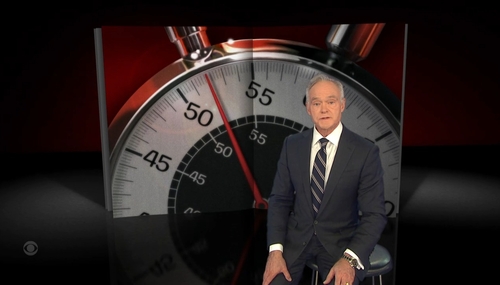
"This afternoon, the House passed a bill that throws an estimated $25-billion lifeline to Freddie Mac and Fannie Mae - the backbone of the home mortgage industry," CBS chief White House correspondent Jim Axelrod said. "The bill makes it easier for both to raise unlimited capital from the government if needed and would allow hundreds of thousands of homeowners to refinance rather than face foreclosure."

Story Continues Below Ad ↓

But Axelrod's reporting didn't explain that the "unlimited capital from the government" comes from taxpayers' money, nor did he explain the bill eliminated the risks associated with lending.

Even liberal Economic Policy Institute senior economist Jared Bernstein, who said the bill is good for the economy in the short term, noted this substantial commitment from the federal government was bad in the long term.

"[T]hat's why I said in the long-run, I think this doesn't solve the problem, it kicks it down the road," Bernstein said on CNBC's "Kudlow & Company" July 23. "As I said on this show the other night, as long as Fannie and Freddie have now an explicit government guarantee, you've got moral hazard deeply embedded in there and that's a problem."

But Axelrod saw the increase in the value of Fannie's and Freddie's stock as an approval from the financial community.

"Wall Street seemed to agree today," Axelrod said. "After the president said he wouldn't veto [the bill he had previously opposed], shares of Fannie Mae shot up by close to 12 percent. Shares of Freddie Mac rose by 11 [percent]."

However, Axelrod's analysis that Wall Street approved of the legislation is misleading. The stock prices reacted because a federal guarantee makes investment in Freddie and Fannie less risky. The stock prices didn't increase because the entire financial community approved of the massive government commitment.
Comments Policy

All comments are owned by whoever posted them and are subject to our terms of use. They should not be assumed to represent the views of NewsBusters.

Viewing options

Select your preferred way to display the comments and click "Save settings" to activate your changes.

Good thing CBS approves

After all, CBS is our Congressional Representative At Large, correct? <insert witty signature here>

Government sponsored kickbacks.

"The bill makes it easier for both to raise unlimited capital from the government if needed"

So, the government is considering giving a "lifeline" payment to people who borrow money from the government. In the civilian world, that would be illegal, would it not? After all, that IS a kickback.

So the fix to the problem

So the fix to the problem of consumers getting easy access to loans they cannot afford is to give them easy access to loans they cannot afford backed with unlimited access to tax payer money!!!

No wonder this country is in the shape it is. A silly question. Why does this country continuously elect these incompetent folks to manage our country's affairs?

"Believe on the Lord Jesus Christ, and thou shalt be saved, and thy house." Acts 16:31

Bush approves this, doesn't

Bush approves this, doesn't he?

There's bipartisan approval

Which probably means the whole bailout was all the libertarians' fault, as usual, since they never complained about the government involvement & implicit guarantee of Fannie & Freddie, did they? ;)
JMR

The tax & spend drug war looks racist in the real world.

Good arguments, all

Seriously, I think the government making an attempt to address this crisis is a good thing, As per ususal though, they're going about is bass-ackwards.

Another concern I've had over this whole sub-prime meltdown is Legialstors willingness (enthusiasm) to put tax payers on the hook for fraudulent loans and unscrupulous lenders. The sub-prime mortgage sector grew out of a need to serve a demographic that was unable or unwilling to provide the documentation necessary to obtain a more prosaic, albeit less costly mortgage.

It's accepted knowledge that a great many sub-prime mortgage holders are in fact illegal aliens. Indeed, numerous problematic lenders targeted this demographic in particular. It doesn't make sense to expect America's tax payers to stand good for the debts (ill-gotten gains) of people who aren't legally entitled to be here.

Certainly one can understand how tax payers might feel "put upon" to insure that illegal aliens who shouldn't be here in the first place, are assured of remaining in houses they can't afford, and technically shouldn't have been able to mortgage to begin with!

Further, I would suggest its dangerously misguided to put tax payers on the hook to insulate unscrupulous, opportunistic mortgage lenders from the consequences of their own greedy actions.

Arguably, the loans granted to "people who shouldn't even be here" increased the costs and reduced the availability of mortgage funds for less risky, less costly loans to American Citizens.

Now that the House of Representatives has worked its magic on a potentially disasterous "Housing/Fannie/Freddie bailout bill", let's hope the Senate will add some amendments to deny benefits to illegal aliens and their unscrupulous lenders. Indeed, I'd encourage all of you to write your Senator and let them know that asking America's tax payers to stand good for the debts of illegal aliens and unscrupulous mortgage lenders targeting illegal aliens, is adding insult to injury.

Remember that Congress initially intended to provide tax stimulus checks to illegal aliens until we, the people found out about it and shouted this nonsense down. Maybe it's time Congress heard from us again, just to let them know we're still watching?

This whole mess simply

This whole mess simply validates what I've said in previous posts. Anyone who borrows money where there is an interest rate involved is a moron, plain and simple. Because you end up paying more than you borrowed in the first place..how stupid is that?

Now, the banks understanding that their customers are morons decided to do a little mafia style loan sharking..only this time they didn't need the 'muscle' because the loans were backed by the US goverment.

So there you have it...neither a borrower nor lender be! 

but at the time it all seemed quite natural

The lenders got themselves into this housing mess with their mortgage fraud. Let all these lenders, Freddie Mac and Fannie Mae go down and out of business and let's start fresh. This story Why The American Business System Is Collapsing is just one of several that was published in Broowaha Reno by a writer calling herself Morgana out of Reno, NV.

"It occurred to her that she ought to have wondered at this, but at the time it all seemed quite natural." Alice in Wonderland 

The fraud in the origination of American home loans guaranteed their debt was secured by a house of cards, nothing more than smoke and mirrors.  How safe debt is, is dependent upon two issues.  The first is what the debt is for.  In other words, what secures it.  The second is the ability to pay the debt back.  In accounting, Assets = Liabilities + Equity.  Assets are everything that can be used to pay debt.  Houses secure home loans.  I have said and written since 2003 about the lack of the value in the American houses to pay back the frenzy of American home loans made.  Fraud in the origination of American home loans guaranteed their debt had zero quality in their ability to be paid back.  Many states have anti-deficiency laws so the borrower has no personal liability beyond the house. Up to 2003, corporate debt overall, was very safe.  It was a rare company that their bonds lost some or all value.  Why?  Because business debt is supposed to involve two expenditures, and historically and traditionally it did.  One is relating costs to current income.  The other is allocating spending to capital goods.  In government, an excess of spending is called a deficit.  In business, it is called an investment.  Rarely does a business do an investment out of accumulated earnings.  Same for government.  Rather, both issue bonds.  The assets of the company secure that bond.  The full faith and credit of the American government secures Treasury bonds.  The companies borrowed household sector savings to finance their capital outlays.  In other words, families invested their money in corporate bonds to finance machinery, plant, research and development, employee education, and other growth promoting expenditures.   Normally, when a bond becomes due, companies issue new bonds that pay off the old bonds.  The debt as a whole is never paid off.  Instead, debt grows.  Look at the history of companies such as Exxon and AT&T.  Why did their debts grow?  The reason is that their physical capital remains productive.  Why?  Because business regularly replaces and upgrades fixed assets.  There was always an investment into infrastructure.  Hence, corporate debt was a profitable and sound place to invest household, bank and financial company savings. 

 That all changed with two strategies.  In the 1980’s, corporate debt doubled from $1 trillion to $2 trillion.  Why?  Because companies were taken over with borrowed funds, corporate junk bonds were issued to pay off the acquisition debt, and the companies then stripped of their producing assets.  The result was debt with no income-producing asset to back debt up.  By the 1990’s, making the interest payments on those junk bonds was taking 90 percent of American business’ after-tax income.  Then American business moved from tried and true “nuts and bolts” investment into speculation.  What happens when that speculation turns out badly?  The result is two backbreaking burdens.  The first is on the investors that invested in what turned out to be nothing.  They lost their money.  The second is on the companies that now have to pay the interest on the debt that is not producing an income to service the debt.  What was the speculation bought into?  Starting in 2003, American home loans.  The fraud in the origination of American home loans is in more than just the sub-prime loans.  It is in the prime loans as well.  The value never was there in the beginning to secure the home loans.  Five years later, it is even less. Business can not legally print money.  The US Constitution allows the American government to do exactly that.  It issues Treasury bonds.  They are United States government debt.  Treasury bonds purchased by many not friendly or supportive to America.  The American government crowds out states, counties, cities, businesses and individuals when the demand for money is greater then the supply of money.

The American federal government has gotten what it wants at the expense of nonfederal borrowers that do not get what they need to conduct daily government, business and living activities.  Currently, and growing, $12 billion dollars a month is no longer available for nonfederal American needs.  Instead, that cash services this administration’s war debt rapidly soon to exceed a total of 3 trillion dollars ($3,000,000,000,000).  The result of the current American administration’s War on Terror is their war has become the economy of American. There was and is nothing wrong with the American rules and regulations that were and are in place to deter, detect and punish mortgage fraud.  America does not need more or a different set of rules and regulations. 

The President’s proposal to put the Federal Reserve in charge and expand its functions is illogical.  Although the Federal Reserve Board is in Washington, D.C., the Federal Reserve is no more federal than Federal Express.  It is not part of American government. 

The Federal Reserve is an independent monetary authority.  It is a private central banking system for our nation.  It was established in 1913.  It was created to strengthen the nation’s banking activities.  America has twelve Federal Reserve Districts.  Each district has a Federal Reserve Bank.  Its member banks own each Federal Reserve Bank.  The Federal Reserve Board coordinates the twelve Federal Reserve Banks.  It has seven members.  The US Senate advises and consents to the President’s appointments to the Board.  Each serves a fourteen-year term.   What America has needed, and still is in need of, is the enforcement of the existing laws and regulations.  It was lender managers, real estate brokers, real estate appraisers, the National Association of Realtors and all their local versions, Freddie Mac, Fannie Mae, HUD, VA, FBI, state Attorney Generals, country District Attorneys, local police and sheriffs, state real estate departments, state mortgage departments, state insurance departments, Justice Court judges, District Court judges, and Supreme Court judges that failed to do their jobs when mortgage fraud was brought, as legally required, to their attention.   The result of that failure and the War on Terror is a perfect storm of an American cash and credit shortage and the largest American deficit in its history even when adjusted for inflation.  Today, America owes it deficit to foreigners rather than historically and traditionally to Americans.  The result of that is lowering standard of living in America and the American recession.  Why?  Because that vast transfer of American wealth and cash to foreigners to service the now foreign-owned American debt, and the increasingly deteriorating lack of value in the American home have brought the American economy to the brink of collapse.  That is certain to take other economies with it. 

Copyright © 2008 Morgana

Ed